Category Archives: History

Curiosities…

p6120313.jpg

The medal in the picture is a British War Medal from the Great War. It isn’t rare – 6,500,000 were issued. Over the years many have been melted during booms in the silver price but there are still many survivors. It’s one of the commonest medals we see in the shop and, generally, they aren’t very interesting.

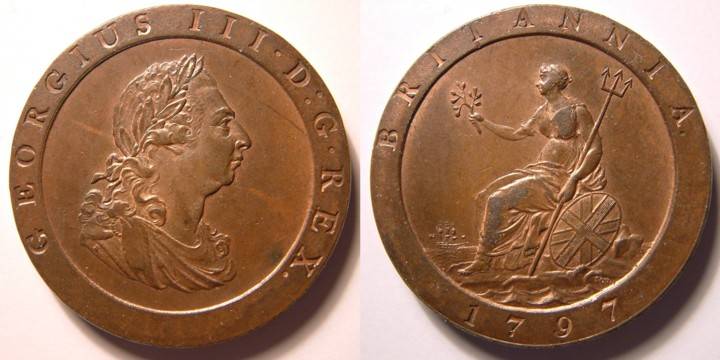
The cartwheel penny is also a common enough item (the first order was for 480 tons of this 1 ounce coin – over 15,000,000) and is often found cut about or counter-stamped like this one. Some people actually collect this sort of mutilated coin. It looks like someone has been trying to make it into a cogwheel. They have also stamped the name “Gosden” into it.

So, two common items, why the blog post?

Well, the medal is named to Private O G Gosden, and this is the first time I’ve ever seen a penny and a medal named to the same family name.

In addition, the Medal Index Card shows that he is only entitled to the one medal, which is unusual, as it usually came in a group. Normally this indicates that the recipient served in India, as part of the force sent there to replace the Indian troops that went to serve in France and the Middle East. In Gosden’s case his unit – the 10th Middlesex Regiment – sailed from Southampton on the “Royal George” 30th October 1914 and arrived in Bombay on 2nd December 1914. It stayed there until the end of the war.

I found no information on what he did during the war, but I do know he lived from 1879 to 1959, was a solicitor in civilian life and left over £120,000 when he died. There’s more information to find, but I’ll leave that to the purchaser as I don’t want to spoil the fun of researching it.

OLYMPUS DIGITAL CAMERA


History and Heroes

I like medallions.

I particularly like well-made Victorian medallions in their original boxes, but that’s just another case of me having champagne tastes and a beer income.

So here are some medallions we put on eBay this week.

First up is Canterbury Cathedral, a well-struck high relief medallion with lots of detail. It’s not the most inspiring subject but it’s done well and there’s an aura of quality hanging round it. This aura obviously communicates itself electronically as it has already sold.


The next one commemorates 21 years of the Volunteer Movement. Founded in 1860 as a reaction to political tensions with the French, the Volunteers built on the tradition of local units raised in Napoleonic times. After nearly 50 years they became the Territorial Force in 1908 and they are now known as the Army Reserve. Each incarnation has seen them become more serious and slightly more removed from the local community. I suppose that’s progress.

It is an extremely well-struck medal and this particular example has traces of original lustre and the box of issue. The box has seen some wear over the years but retains its original velvet and silk lining.

On the reverse, St Michael guards a woman an children, supported by three warriors representing England, Scotland and  Ireland. You can tell this from the rose, thistle and shamrock on their shields.

The final medal was produced by the Royal Mint in 1990. It’s good for a modern medal, but still suffers by comparison to proper, old medallions. It commemorates 200 years of lifeboat design. I like it because it has an interesting historical subject and it’s treated with enthusiasm (even if it does have a dull, low-relief reverse).

-Of all the heroes we’ve ever had, you’ll have to search hard to beat a lifeboat man, as this link shows.

Weather, Wiki and Wanderings

I’ve just dropped Julia at work, returned home and turned the computer on to check the weather.

The current weather is  cloudy, 1 degree Centigrade (which feels like -3 due to windchill), humidity of 93%, visibility of 12 miles and pressure of 1010 mb.

The first point that occurs to me is that I could tell most of this from sticking my head out of the door. The second is that I don’t know what 1010 mb represents and the third is that I can’t see 12 miles in most directions on account of houses and trees and other environmental clutter. and I don’t understand humidity.

Specifically, I don’t understand why the humidity is currently higher than it is forecast to be for the rest of the day, when it will be raining. To my simple mind 100% humidity is what you find in a swimming pool, so I don’t know how a damp but rain-free morning can be 93% humid when a rainy afternoon is forecast to be 72%.

It’s a mystery, as Toyah Wilcox used to sing.

I looked Toyah Wilcox up on Wikipedia after mentioning her. I then went on to Robert Fripp, Fripp’s uncle Alfie…

After that I ended up with Paul Brickhill, Roger Bushell and, eventually, Tim Birkin. There were a few more links in there, but I’ll leave you to make your own journey.

The Birkin article, though mentioning his younger brother Archie, fails to mention his older brother Thomas. I sometimes despair at the standard of some Wikipedia entries, though not so much that I’ve ever contributed anything to any of the articles. It seems fair to include Thomas as he seems to have been equally as intrepid as the others.

I’ve lost my Birkin notes, taken about 20 years ago, but I know there is a family link to Jane Birkin. They are a Nottingham family, in case you are wondering about my sudden interest in a random subject.

It’s time to leave you now, as I’ve frittered enough time making an accidentally symmetrical journey between two multi-talented women. A few musings on weather forecasts seem to have taken me quite a way. I am now equipped with new knowledge (which is good) but it is time for breakfast (which is better).

Six Thousand Shillings Sitting on a Shelf

We started sorting shillings at 10.00 and finished at 14.30. If we’d started four hours earlier, or spent another hour and a half sorting, it would take the tongue-twisting title to a whole new level.

A sixish start spending six hours sorting six thousand shillings sitting on a sagging shelf is not a sentence to be attempted lightly, or in polite company. Even for an alliteration addict like me, it’s a bit much.

OLYMPUS DIGITAL CAMERA

Silvery sorted shillings sitting in a sorting tray

The sets of  shillings are slowly taking shape. Coincidentally my back is also taking on a new shape, which is much more hunched than it was a couple of days ago. Shilling Sorters Spine is shortly going to be written up in The Lancet.  Or possibly the BMJ. One of my friends was once written up in one of them after the premature detonation of a cannon.

We were re-enacting the English Civil War in the Sealed Knot somewhere in Somerset (that’s not a security measure – I just can’t remember exactly where). The mop for swabbing out the barrel was a bit worn and it allowed a glowing ember to survive the operation. When the powder was rammed home the ember ignited the charge while he was still ramming.

This is clearly a bad thing.

Fortunately, because he was using good technique, the ramrod merely took the skin off his palms as it whistled across the “battlefield”. The blast also blew off his shirt sleeves and peppered his arms with fragments of black powder.

And that, when one of the doctors realised this was a rare chance to write up the hazards of muzzle-loading cannon, was how he appeared in the medical press.

We never did find his shirt sleeves…

Just to give you some idea of what the blast looks like I’ve purloined a photo from the web.

Image result for sealed knot cannon


Another of my mates was shot in the small of the back (mere inches above anywhere that would have provided a highly amusing and ribald anecdote) by a cannon at Naseby. But that is another story.

Paper Flags

I first became interested in paper charity flags when I saw some in an antique shop in the early 1990s. They were stuck to a card and had obviously been in a scrap book. This rendered them useless to a collector in many ways but it had allowed the previous owner to write dates and information next to them, so they were more interesting in another way.

As you can see – ambulances were a popular subject. The stories of privately raised medical units, and the people who staffed them could be a book in itself. This list  gives you some idea. Add Lawrence Binyon to it. He often gets overlooked.

Over the years I added a few more, even buying a few off a lady who had kept one of each that she had sold for the Red Cross in 1918. She was sitting with her grand-daughter at an antiques fair in a Suffolk village hall. She was happy that the flags had found a good home, and I was happy to have spent a few minutes chatting with a lady who had eighty years of history behind her. That was in the days when it used to be worth stopping when you saw a sign by the roadside.

Horses were popular too. Eight million horses died in the Great War, plus countless mules and donkeys. They had, as far as I know, no strong views on Belgian neutrality, and didn’t get the right to vote in 1918 after their contribution to the war effort. All in all I think they got a raw deal.

There’s a good Word Press site on military horses but I can’t find it at the moment – I’ll have another look tonight.

As with almost everything, I have various parts of the collection scattered in a variety of boxes around the house, and have a patchy knowledge of the subject. If only I’d applied myself to learning more about the subject I might be an expert with a PhD on litter and a TV series on The Things We Threw Away. Stranger things have happened.

I took a few photographs recently, so here are a few examples for you to look at.

Belgians were also popular in the Great War (see Hercule Poirot for example) and ended up here in great numbers. This link told me a lot I didn’t know about them. I’ve seen the odd plaque about, including one in the Nottingham Guildhall but I never really looked into the subject. I believe that Belgians did have strong views on Belgian neutrality – look here and here for two who certainly did.

Research and Responsibility

No, not a review of one of Jane Austen’s lesser-known offerings, just some thoughts on family history and similar research.

It can all be summed up by the case of my great-great-great uncle Moses. According to the Blackburn Standard of Saturday 16th February 1884 one Moses Gregson, a stone mason, was up in the Borough Police Court for using threatening language to his wife Margaret the previous day.

It may very well be a tale of domestic violence, but on the other hand it may be the story of a family man (or lovable rogue) who took an uncharacteristic drink and ended up in deep water. He was also fined 5 shillings for appearing drunk in court the previous day, so I suspect that he’d been hauled into court by the police whilst still full of the drink that had caused the original problem.

The question is whether to tell people or not.

To modern day members of the family it’s an historical curiosity, but if you tell outsiders it could be a bit embarrassing. It depends on your sensitivity to such things, and though I’m no shrinking violet I do feel a twinge when discussing the story.

The embarrassment would rise, I feel, as you go back in the generations. My mother would have been very unhappy with me revealing it, and my grandmother would have been quite upset. My great-grandmother, who may well have known Moses as a child, is an unknown quantity.

She was born in 1879 and is the oldest member of the family that I knew personally. I really don’t have a clue how she would have reacted to me telling the world her uncle had been in court for drinking and using threatening language to his wife.

If she was still alive I may have been too embarrassed to even mention it to her. She in turn may not have worried about it at all as she had grown up with many things and taken them all in her stride.

This leads on to another example.

I have a small silver medal issued in 1919 to thank a railwayman for his service in the Great War, where he had served in Mesopotamia.  He had two spells in hospital – once with fever and once with syphilis, which seems to have brought his service to an abrupt end. This article discusses venereal disease in the Great War if you are interested.

It’s slightly different to the case of Moses Gregson, as he isn’t a member of the family and I feel no embarrassment about it. I do, however, feel that family members who knew him may still be alive and it’s for them to talk about it (if they want to) rather than me. He was still alive into the 1980s and some of his old neighbours might still be around too.

It’s quite a can of worms when you start looking at it, and the choices are even harder when you’re trying to think of someone else and their reaction.

If something was mentioned in the newspapers in 1884, or in army records in 1918 should we talk about it openly, or should we worry about the possible sensitivity of other people?


Clitheroe and Family History

We went to Slaidburn on Monday, taking the tree picture on the way. It’s a fascinating old village, which wouldn’t look out of place in a Harry Potter film (or a Hammer House of Horror film for those of us who remember them).

I’ll be writing about that visit in a couple of days.

Then we went to Clitheroe. It’s a pleasant small town not far from Pendle Hill, and it has cropped up a few times in recent posts, mainly as a residence for various members of my family. I used to enjoy visiting it when I was a child, though I have to say that I never noticed how hilly it was when I was younger.

It was a dullish day so I had a go with the effects on my computer – not sure if it’s worked or not. One of my early memories is of visiting the war memorial with my grandmother and being shown her father’s name on the side.


Like so many others he’s just a name on a memorial now, I doubt if anyone who knew him is alive now.

These are various homes of the Carus family over the years. The one with the red car is where my grandmother was living with her widowed mother in 1917, and may be the one where the family photo was taken. The view of the castle is the one they would have seen when they stepped outside.

Harry Carus and family. Clitheroe 1915.

Harry Carus and family -1915

The house with the silver car outside is the one where all the family lived in the late 19th century – all nine of them!

The other one, with the box balls in the front garden, is where Isaac Newton Carus lived, before handing it on to one of his sons.

I have a lot more to do, so this is just the tip of the iceberg. It’s a strange feeling, seeing all these places where family used to live, particularly as I must have passed within 100 yards of one of them dozens of times without realising.

Peace Medals

When all the fighting was done, the UK decided to have a national Peace Celebration. The selected day was Saturday 19th July 1919. This was a little optimistic as the Great War was not officially over when they started the planning, and we were still engaged fighting the Bolsheviks in Russia. We were also still fighting amongst ourselves, with mutinies in Southampton, Calais and Kinmel and tanks on the streets of Glasgow.

There was trouble during the celebrations too, with the riot at Luton being the best known. The town museum, as I remember from a visit many years ago, has a livelier version of events than The Guardian. They blame trouble between the The Discharged Soldiers’ and Sailors’ Federation and the Comrades of the Great Warfollowed by a riot which involved looting a piano shop and playing Keep the Home Fires Burning after setting fire to the Town Hall. The two ex-service organisations had different political outlooks, the Comrades of the Great War being set up as a right wing alternative to The Discharged Soldiers’ and Sailors’ Federation. Eventually they were to resolve their differences and become founder organisations of the British Legion.

Part of the Peace Celebrations featured the giving of medallions, often in white metal, to local school children. Unlike 1911, Nottingham didn’t produce a medal. The Nottingham Peace Celebrations provided sports, cinema visits, fancy dress parades and teas for 30,000 children, though there is no mention of medals, apart from sports prizes.

Some places provided generic medals, though others were specifically made for individual towns and villages. The Derby Peace Medal in the header page is one of the better examples of design – featuring the badge of the local regiment.

The Sheffield medal is more typical, with a generic figure of Peace on one side and the city coat of arms on the other side.

The Birmingham medal is slightly better from the design point of view – I’ve always liked this representation of Victory. It features on a generic peace medal, with an agricultural scene on the reverse, which was the first of these medals I ever had (given to me by my grandfather back in the 1970s).

This is the obverse and reverse of the Derby medal.

Note: I’ve added a link to the previous post to access a picture of the 1911 silver steward’s jewel.

Nottingham 1911 Veterans’ Dinner

This is the medal that was given to members of the Boy’s Brigade and Boy Scouts who lined the procession route for the Veterans’ Parade in Nottingham during the Coronation celebrations. The Scouts were, at that time, a new organisation compared to the Boy’s Brigade. The medal features two stags with very flat antlers. They have to be flat to allow room for all the wording.

I presume Mrs J A Morrison was the wife of J A Morrison DSO, who was MP for East Nottingham between 1908 and 1912, and was host of the dinner.

There is a book which lists the names of the war veterans who went to the dinner, which was held at the Empress Rink, King Edward Street, Nottingham. The skating rink is reported as burning down in 1910 and being rebuilt as a cinema, which opened in January 1913 so I’m not sure how it hosted the dinner in June 1911.

There were 1,600 veterans, with 2,475 medals between them. The oldest veteran was 90-year-old E Pratt of the 17th Foot, who lost eight toes to frostbite in the Crimea.

Each veteran was given a copy of the book as a souvenir, with Stewards being given silver jewels (which I have seen, though never been able to photograph), and Captain Morrison, as he was then, being given a gold and enamel jewel.

Edit: This is a link to the catalogue archive of auctioneers Dix Noonan Webb showing a picture of a silver stewards jewel.

The Carus Brothers at War (Part 3)

W D Carus (2)Only one of the other three brothers seems to have served in the war.

Thomas, the oldest brother, was a Labourer in a Print Works in 1891, a Cotton Mill Oiler in 1901 and a Corporation Labourer in 1911. According to his obituary (September 1938) he joined the Clitheroe Fire Brigade in 1911 and served for 26 years. I’ll leave that for another post.

Albert, who was unmarried, and a Print Works Labourer in 1911, died in 1913. I don’t know anything about the circumstances, so that’s another avenue of research. In 1911 there was someone else in the Carus household too – Margaret Evelyn, a grand daughter aged seven. She was born in Aldershot, and that is part of Walter’s tale.

In 1911 Walter was living with wife and two younger children in Aldershot, where he was working as a carman for a furniture company.

There is little military paperwork, just an index card (pictured above) for a Walter Carus indicating that he went to France on 18th August 1914. On the back of the card is a Clitheroe address.

Adding Aldershot to a soldier who went to France within two weeks of the start of the war, I decided that it was likely that Walter had been a regular soldier before the war, and he had been called back from the Reserve (they mainly signed on for seven years in the army and five in the Reserve).

And that, as I often say, was that.

Looking through the papers, I was able to find this article in the edition for 3rd August 1917. The superimposed blue frames are part of the search process.

OLYMPUS DIGITAL CAMERA

From the mention of artillery, it looks like he may have been in an artillery ammunition column, delivering shells to the front. I can see that three years of that would produce “some exceedingly narrow escapes”.

The next time he appears in the paper is in 1955, when 50 members of the family took part in a reunion, when a son and a daughter, and their respective spouses, returned from overseas military postings. The full family was three sons, seven daughters, 34 grandchildren and 3 great grandchildren. Plus in-laws. One of the sons-in-law produced cakes for the party – he was a prize-winning member of the Army Catering Corps so they were in safe hands.

His final appearance in the paper is a short obituary in 1957, which reveals the additional details that he served in the Army Service Corps for 19 years and was an Old Contemptible and member of the British Legion. He was a joiner by trade and retired from his last job, at the Ribblesdale Cement Co Ltd when he was 65.

I had three other relatives working there around that time, all from different branches of the family tree.

An Old Contemptible, in case you aren’t familiar with the term, is a soldier who served in France and Belgium with the British Army in the first phase of the war – 5th August 1914 to 22nd November 1914. They were referred to as a “contemptible little army” by the Kaiser.

It’s true they weren’t a very big army, and they didn’t have great equipment. If you subscribe to traditional views of history they may even have been badly led.

But they did what was necessary.