Category Archives: poetry

A Day of Non-Achievement

Another day and a rejection. It wasn’t unexpected, because I haven’t been struggling for the last few months. Normally I would not have sent much out this month, but having set myself targets for submissions, and needing to show some self-discipline, I wrote and submitted anyway. In some ways it was a bad idea, but based on past experience I can’t afford to let the momentum fade.

Believe it or not, there was a time when I used to have all my submissions ready for the beginning of the month. I seemed to have so much time in those days. The theory was that if I submitted first, all the subsequent submissions had to do two things – one is that they had to be good enough for publication, but the second was that they had to be good enough to replace the submissions I’d already submitted. This works if editors look at submissions as they come in, but it doesn’t if they wait until the end of the submission period before looking.

There used to be a lot of blogs and internet articles about the science of submissions at one time. I couldn’t find any tonight. There were a few about how to submit (spelling, manners, timeliness, stick to the submissions guidelines etc) but none of the sort I wanted – the ones that used to treat it as pseudo-science and work out ways of increasing your chances by trickery and mind control.

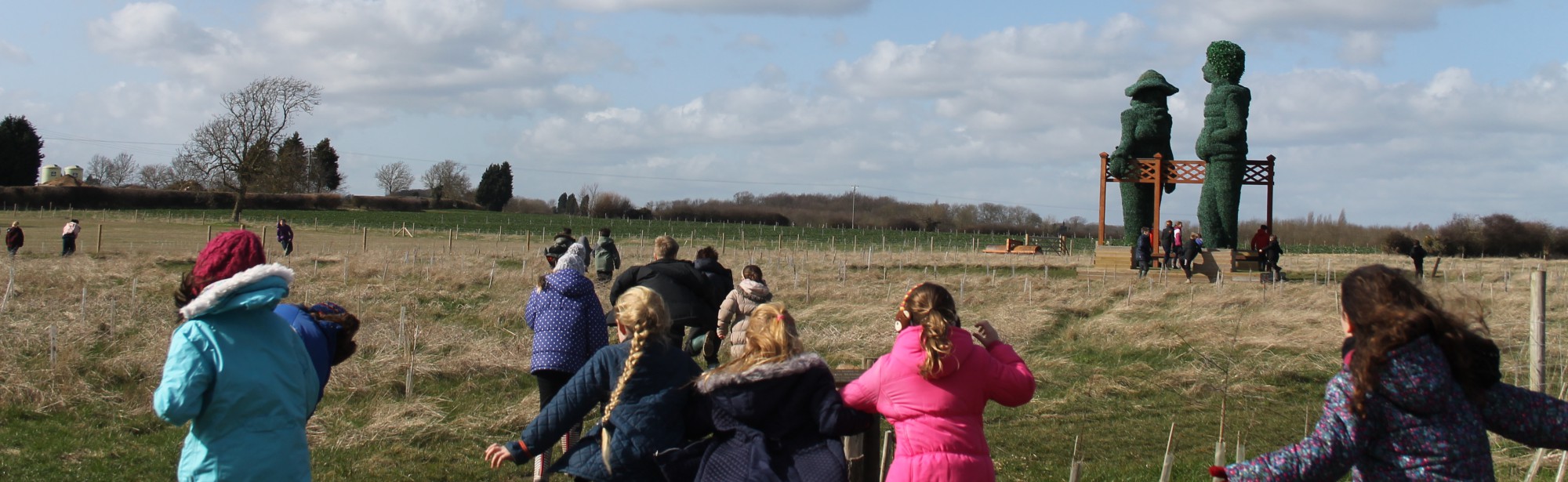
Pictures are from Julia and my sister – they went round the Shaun the Sheep exhibition in Peterborough yesterday. More about that tomorrow. I now have a home made quiche to eat and a wife to talk to. She hasn’t seen much of me today as I have been messing about on the keyboard and achieving very little.

Ah well, time to go. I will add a few photos and talk about them in the next post.

The Mystery of Editors and Some Thoughts on Writer’s Block

Photo by Pixabay on Pexels.com


I had my first acceptance from the July submissions on Monday. It was a tanka that had actually been rejected in June, but after a quick check I decided that it was ready to go again.  It was part of a group of nine that had been returned after the tenth was accepted, so I only needed to write one to make the submission up to ten.

It’s one of the age-old questions writers have. I send out ten poems, one is accepted, does that mean the other nine are not good enough?

Sometimes I’ve had an editor ask if they can hold one over for the next edition. I always say yes to that – it saves me work and I assume it saves them work too. If it wasn’t for editors there wouldn’t be any magazines. And if there were no editors and magazines there would be no competition for publication. That’s why I mainly only blog poems that have been published – it means that someone who knows more about it than I do has decided that it merits space.

I’ve also had editors select two or three poems (very, very rarely) and a couple of times they have told me the rest weren’t bad, just not what they wanted for the moment, and I could submit them again at the next submission window. This is very rare – remember we are talking about something in the region of 400 submissions and this sort of thing has happened a handful of times.

Photo by Burst on Pexels.com

It all tends to indicate that several of the ten are publishable, and that they can all be recycled. That’s why I like editors who give quick decisions. If they reject something in the first few weeks, I can use them for another submissions and don’t need to write as much.

This may be a bad attitude, and more akin to the approach of a  worker on a production line than an artist but  this month I’ve just had an article on collectables published in a magazine, plus four Facebook articles for the Numismatic Society of Nottinghamshire and  a couple of longer articles  for the Peterborough Military History Group. If I waited for aesthetics and inspiration to align I’d struggle. Dawn comes, I drag myself from bed, I make tea, then I start writing. I hate mornings. I like tea and I like writing. I have no time for Writer’s Block and curlicues. And I’m more likely to suffer from dehydration than a shortage of words. I have no time for the introspection in the article behind the link. It’s very interesting, and more than slightly familiar, but I can’t afford to let such thoughts take root.

Photo by Roman Koval on Pexels.com


It’s a Haibun

Here’s a poem for you. It was first published in The Haibun Journal in April 2025. I could say it’s a comment on art and the people who think that four minutes and thirty three seconds of silence is music. If I had a Masters Degree, as many poets seem to have, I could probably get away with that.

But I don’t. I have a City & Guilds in Poultry Production, so I settled for writing a piece about being desperate for inspiration. I’m told that writing poems about writing poetry is almost guaranteed to get you turned down because editors see so much of it, so I got lucky here. Well, I got lucky the third time I submitted it, which would make a good case study on persistence.

Originally it was a tanka prose but it became a haibun, removing the tanka and using a haiku that I’d previously had rejected when it was sent to a haiku magazine. “Three Minutes Thirty Three” was originally “Six Minutes Sixteen”, I added the bit about alliteration making it poetry and substituted “watching birds” for “watching daytime TV”. Whether those qualify as improvements I’m sure. There are probably a couple of tweaks I would make if I ever get round to that poetry book, but otherwise I’m happy with it, which is not something I say about all my published poems.

Anyway, this is the finished version. For now . . .

Two Hours Twenty Two

An hour and forty eight minutes pass before I dredge inspiration from the depths. I know this because I set a timer to put myself under pressure to produce. If John Cage can do 4′ 33”, I thought, I can do Two Hours Twenty Two. It’s not accurate, but it is alliterative, which makes it poetry. If I’d set off with Cage’s piece in mind, I would have settled for Three Minutes Thirty Three and passed the rest of the morning drinking tea and watching birds feed in the garden.

a blackcap
sings from tangled thorns
—the stalking cat


A Grumpy Old Man of the Neo-Carolingian Period

Pigeon

I thought about using a title such as Sun, Sea, Sand and Samphire, but as there is no sea, no sand and very little sun, it seemed cynical and unfair. To be honest, apart from a rumination on why we eat samphire (salty, bitter and woody are three of the kinder words I would use) there wouldn’t be much about samphire either. I once ate foraged samphire while I was wild camping (or ate samphire while I was camping, if you remove the 21st century vocabulary, which tends to over-complicate quite simple things).  I had no kitchen facilities and didn’t wash it well, so you can add gritty to my lexicon of samphire stories. In other words I eat it when it is free or a couple of times a year when I feel I should add some variety to our lives.

Yesterday was (First World) Hell. having been ill and managed my time badly, I struggled to make seven of my nine planned submissions. Oh, the struggles of a poet. It’s not a very artistic way to go about my art, but if I didn’t impose targets I’d probably be writing about writer’s block instead. It’s all about regular practice, and the phenomenon where having ideas brings out new ideas. One editor actually used the word “brilliant” about one of my submissions a few months ago. Another used the word “greetings card” a few months before that, just to preserve a sense of balance. However, I do feel that regular writing is the key to success, and setting targets makes me write poetry. Left to myself I would just write about coins, medallions and history. And civil servants, technology and the disappointing nature of my life compared to my dreams and the projections of 1960s sci-fi programmes.

Greylag Goose Arnot Hill Park Arnold

Note the addition of (First World) above. I am well-fed, not in danger of being bombed and can can walk down the street (as can my neighbours) without fear of being picked up by masked bounty hunters and sent “home” due to a minor mistake in my paperwork. My children had access to food and healthcare and grew up in a world largely free from violence. I’m actually beginning to feel a little guilty about how easy my life is compared to other people around the world.

When that mythical 22nd Century PHD student, to whom I often refer, starts to read my blog as part of his thesis on Grumpy Old Men of the Neo-Carolingian Period  I wonder what he will make of my concerns.  Of course, by that time he may actually be wearing furs to protect himself from a nuclear winter and making tools by chipping bits of flint as the wolves circle his camp. In that case I would be torn (assuming that I had mastered the art of time travel, which is unlikely, as I struggle with keeping track of keys and maintaining my keyboard in crumb-free condition) between being sad to see what a mess we had made of it, or happy at being right about the mess we had made of it of it.

Arnot Hill – Alder Tree


Four Hours

Feathers and Water

The day is slipping by. At 6.48, after one of those nighttime visits my age demands, I decided to go back to sleep. The postman woke me when a heavy parcel fell to the floor with an emphatic thud, and 8.02 I rose. After checking emails (nothing of interest) I answered my WP comments and looked up butterflies on websites. The USA has 750 species, Australia has 420, the UK has 55. I feel, yet again, that I am the poor relation.  Then I wrote a poem. It is now 9.58 and mid-morning approaches, signaling an end to what I always feel is my most productive time.

The “poem” that I wrote is far from complete, but it is a promising start. In human terms, I have the skeleton in place, and mostly in the right order. Some of the limbs have flesh on.  More a zombie than a human, and more a grotesque pile of words than a finished poem, but it’s a start. Every journey starts with a single step, every pearl with a grain of sand, and every poem begins when you put a few words together to form a thought or picture. They aren’t always the right words or in the right order, and they don’t always appear in the finished piece, but it’s a start. It’s already on its second title . . .

I’ve been worrying about my poetry recently.

View from Bangor Pier

it’s 10.22. I have eaten cereal and fruit, drunk tea and watched birds. At one point we had 16, possibly more. It’s difficult to tell when they are milling about and perching inside shrubs. It is a great advance from the handful we used to get when we moved in last winter. How much of teh change is due to a gradual build-up, and how much is due to seasonal changes, we don’t know. I will have to look up kaleidoscope in the dictionary.

Invented by a Scotsman, patented 1817, it seems to have been regarded as a serious bit of scientific kit in its day, rather than the child’s toy it became. See, I wanted to look up a word to use in writing about a whirling mass of birds, and ended up reading about Scotland, science and the Disruption of 1843. That’s where my time goes.

Another view from Bangor Pier

Back with my poetry thoughts, I’ve been worrying that I have become one of those poets I used to view with suspicion – friendly with editors, prolific and widely published. But have I written anything of merit, or have I just found myself a groove where I churn out the equivalent of greeting card verses for poetry magazines?

That’s something I will be thinking about over the next few weeks. For now, as the clock nears 11am, I will add tags and photos to this post and think about what comes next.

Coffee, sorting books and worrying about the direction of my creative life.  It is enough.

Pictures are from July 2019

Hoverflies on an orange poppy

Poetry and Robins


Robin - singing

Robin – singing

a robin
sings to its mate
when was the last time
I sang
for you?

That is my latest publication. It was a surprise, because I hadn’t ben told it was accepted. Fortunately I always check before sending things again, as editors don’t like simultaneous submissions. It’s in a German publication called Chrysanthemum. After waiting a while, I went to check on the website, assuming I’d been rejected but wanting to double check, and found the magazine had already been published and I am on pages 226 and 227.. It was a pleasant surprise. They also translated it into German. I knew this was going to happen, but hadn’t anticipated the different look (using capital letters) or the different dynamic that would come from what seemed to be a reordering of words.

Here’s the German translation.

ein Rotkehlchen
singt für seine Gefährtin
wann habe ich
das letzte Mal
für dich gesungen?

Robin, Arnot Hill Park

I just fed it into an internet translator and it put it into English in almost exactly my words. This was a surprise, and a superb effort by the human translator. I have to admit I was expecting it to come back seriously scrambled due to the changes in word order I could see and because of previous experience with internet translations.

I also had a haibun published.

Lesson not learned
Only a few miles from where I sit, a mammoth died. Grass grows on what was once
a Roman town. Stone spires show where a great religious house rose and fell, then
rose again. So many empires, so many layers of dust telling one and the same story

dreams of
a second chance
— one more grey dawn

I’m not quite sure what happened in the edit as the title and last line have been altered in the published version. Altered but possibly not improved. What do you think? The original version is shown below.

Lessons we have not learned

Only a few miles from where I sit, a mammoth died. Grass grows on what was once a Romans town. Stone spires show where a great religious house rose and fell, then rose again. So many layers, so many stories they could tell. So many men forget all empires turn to dust.

dreams of
a second chance
—one more grey dawn

Robin at Rufford Abbey

That means that in the first four months of the year I have made 30 submissions and 22 have resulted in acceptance. However, before congratulating myself, I have to remember that the 30 submissions contained 151 poems. Normally a submission contains three haibun or tanka prose and the submissions of shorter poems at often 10-15 poems. So when I say I made 30 submissions and had 22 acceptances this 77% success record could also be calculated as also only 15%. It all depends on how you look at it.

Robin


A Lost Week!

Golden key (actually silver-gilt, used by Sir Arthur Blake KBE at the opening of the Nottingham savings Bank branch on St Ann’s Well Road, Nottingham, November 23, 1926

I just looked at the date on my last post and received a shock. I knew it had been a while, but was amazed to find it was a whole seven days. So, what have I been doing?

Not much.

From the point of view of colour rendition this shows I stll have a lot to learn. Taken only seconds apart under the same light

I have become addicted to writing articles about junk. I have now done four for the research page of the Peterborough Military History Group, a couple more for the newsletter and nineteen posts for the Numismatic Society of Nottinghamshire Facebook page. I’m never sure if these really count as “acceptances” as they are short and they are submitted to people I know.  On the other hand, poems are short too. I became obsessed with “The Golden Key” as I started writing it. I’ve had it about 30 years and never really got on with it, so it was about time. I can’t set a link directly to it but it’s currently at the top if yo use the link above.

Even better if you can leave a “Like”. It’s part of my crusade to strike back against traditional coins. There’s a place for kings and stuff in numismatics, but for every King there are thousands of commoners and they all have stories too.

Sir Arthur Blake KBE JP – a photograph taken later in life – courtesy of the national portrait gallery.

Talking about acceptances – I had a rejection this morning. It means that my record for April is 100% rejections. Not one single acceptance. It’s a strange month, as there was only one journal open for submissions, and that was only open until 15th April, which is why I can tell you, by the 24th, that I have a 100% rejection record. I’m sure I’ll get over it.

That’s it for now. I will have some cracking photos for you over the next few days as we have been going through some old boxes. However, for now,


Struggling Still with Time

Buzzard

I had another acceptance. I’m now about to enter a lean streak with just three editors to reply – one I’ve never submitted to before, one is a new editor with a magazine that normally turns me down and the third is a guest editor in a magazine with which I have mixed results. And that final one is the one I submitted as the only submission of this month. With everyone cutting back on frequency of publication, and with them all operating on different schedules this sometimes happens. A few years ago there were several who published every month but both of them have now gone to publishing just six issues a year.

I now have more poetry to write, so I had a quick image search for Crowland Abbey. It’s been an interesting subject over the years, and I just wanted to look at some photos for ideas. I found a great picture, and a quote I recognised from John Clare’s sonnet about the abbey – Wrecks of Ornamented Stones. It’s a good quote and, I thought regretfully, a shame that someone had already used it.

Donkey watching . . .

Then I looked harder. It seems I’m being immodest in calling it a great picture, as it’s one of mine, and it was me who already used the title. Sometimes I’m just so prolific I forget what I’ve written. February 2017. We’ve seen a few changes since then. Like the old abbey I am “struggling still with time”.

Having appropriated another line of Clare’s poem I am now going back to my previous (pre-Crowland search) activity – reading tanka and stealing ideas to help me write poems of my own. That’s the T S Eliot method isn’t it?

“Good poets borrow, great poets steal.”

Captain Cook and a seagull

Unfortunately, as usual, it seems to be a misattribution. What he actually said was  “mature poets steal; bad poets deface what they take, and good poets make it into something better, or at least something different.” I know that because I just lifted it from another blog. I could research it myself, but it was easier just to cut and paste and then post a link.

It’s pretty much the same, it’s just that the second quote is far too complicated. I look through a poem and extract something that sets me going. It’s not plagiarism, or outright theft, it’s seeking inspiration and understanding. Think of an opal miner. They take a stone from the depths of the earth, and give it a wash. It’s a thing of beauty in its own right. Then a stone cutter cuts and polishes. Still a thing of beauty, but different, as it is after a jeweller has set it.  Theft is probably not the right word, it’s just a well-travelled idea, and I’m about to take a few of them on a new journey.

Wren


Another Poem


Apple Blossom – Sherwood

Paper Cities

My wife’s mother watched American bombers glistening in the sky, saw the bombs fall and, later helped clear the debris from the dropping of an atom bomb. She told me stories of what happens when you drop incendiaries on a city of paper houses and taught me how to fold a paper crane.

On the other side of the world my mother tried her gas mask on and practised hiding under her school desk. In October 1940 a German bomber flew low across the school and dropped two bombs. She picked up a piece of bomb casing in the school yard while it was still warm.

We discuss this with the kids as we fold paper cranes for a school project. It means more to them, when told in terms of grandmothers, than all the pictures on TV.

familiar folds
I have not made
the thousand yet . . .
one of the children asks
for blue and yellow paper


First published in Cattatils – August 2023

Some blossom is showing


An Old Poem is Found, Repeated and Recalculated

Stone on the Floor – warning of poetry ahead

I’ve just spent much of the last two days sorting out files on my computer. Things had become so chaotic that when I wanted to start making submissions at the end of last month, I couldn’t actually find a lot of things I needed. Clearly something needed doing, and I have therefore done something.  It’s not quite fixed the problem but it has made it more manageable. Everything is now contained in a dozen files, and each file has a title that reflects the contents and isn’t confusingly close to the title of any other file. Of course, below that level, chaos still reigns, but it is slightly more orderly than it was, and I’m in with a fighting chance of getting on top of it.

The thing that really strikes home about the poem, apart from the obvious fact that it could be improved, is the fact that only seven years ago you could develop a thought and report a mental journey. You didn’t need all the drama and excitement a lot of editors seem to be seeking these days.

Thirdly, it strikes me that this was published 225 weeks ago. I no longer have the 999 weeks of which I wrote (given average longevity and a following wind). I now have 775 weeks, and that doesn’t sound anything like as good.

Snowy Detail

Seven Thousand Mornings

I knew today wasn’t a morning I was going to enjoy because the tip of my nose was cold and there was a sliver of grey showing round the edge of the curtains. Summer had ended.

This thought made me pause, and in that pause I let my mind run free. I had been watching a TV programme on life expectancies the night before and it suddenly struck me that if I took my current age from my life expectancy and multiplied it by 365 I would know roughly how long I was going to live.

It wasn’t until I finished that I realised I didn’t really want to know.

It’s about 7,000 days.

That’s approximate. I forgot the exact life expectancy, and I multiplied by 360 because it’s easier. I also like all the wrong sorts of food and avoid exercise, which is the wrong way ’round for longevity.

This makes the calculation even less exact.

If it is 7,000 days that’s only a thousand weeks.

Next week it will only be 999 weeks.

I might have to think about getting up earlier and working harder in the time I have left.

Or, I might just give up mental arithmetic.

in the rustling leaves
squirrels seek acorns
two paths diverge

First published Haibun Today 12.4 (December 2018)

Squirrel at Rufford