Category Archives: nature

Bempton Cliffs again

We saw these beak fencing Gannets at Bempton Cliffs today. It’s part of their mating ritual. He later went fishing and came back with a gift of fish. It seemed to work, as I had to delete the ensuing video rather than become known as an avian pornographer. I reminded Julia that I bought her favourite – smoked mackerel – earlier in the week. According to her answer it seems that gifts of fish don’t have the same significance in the human world.

Some of the birds are on the cliffs, but most of the auks (including around a dozen puffins) are content to sit on the sea for the moment.

Have to be quick, as I need to post this before midnight. Here are a few other pictures.

It was a good day and the telescope came in useful for looking out to sea. Those Puffins were miles away!

A Walk Round the Lake

Life can’t be all nature reserves and rarities, so yesterday saw us back at Rufford Abbey. There was, as usual, nothing rare, but there’s always something worth seeing.

The Robins were in good voice.

OLYMPUS DIGITAL CAMERA

Singing Robin – Rufford Abbey

We spent a while watching two Magpies building a nest in the tree tops (without being able to get a clear shot) and a pair of Nuthatches popped out of the woods to have a look at us. They are always a challenging subject as they tend to flit about without regard to the needs of photography. This was the best photo, despite only showing one of the pair.

OLYMPUS DIGITAL CAMERA

Nuthatch in an Elder tree

We saw two Wrens and managed to get a couple of shots (they are worse than Nuthatches for flitting about), checked out the Great Crested Greebes (now in full breeding plumage) and watched a Grey Heron drop in to fish. Great Tits and Dunnocks also cooperated by posing.

Despite the fact we walk here most weeks, there’s always something new to see and always something new to learn. I never knew, for instance, that magpies build nests using branches that are nearly as long as they are.

Shiny Ducks and Spurious Swans

OLYMPUS DIGITAL CAMERA

A Spurious Swan

You can’t blame kids for being ignorant when you see a parent tell them “Look at that Swan.”

That’s the “Swan” in the picture above. The white bird that’s the size and shape of a duck and has a curly tail just like a drake. It walks and talks like a duck too. I’m not one to take the moral high ground on bird identification, having already proved I’m shaky on waders and not good on gulls. (And if you wait for summer I’ll parade my tragic lack of warbler skills).

However, a Swan is a basic bird, like a Pigeon, a Sparrow and a Magpie. In an ideal world such basic knowledge would be part of the Parenthood Exam and if you couldn’t ID a Swan you wouldn’t be allowed to breed.

That should also weed out people who feed pigeons even though told not to.

OLYMPUS DIGITAL CAMERA

Who? Me?


Meanwhile, the Odd Couple seem as close as ever.

OLYMPUS DIGITAL CAMERA

I worry about these two…


A Day of Dabchicks

We went to Old Moor, an RSPB reserve in the Dearne Valley between Barnsley and Rotherham.I’ve never thought of this area in relation to birds before, but there are 250 acres of wetland with a variety of hides, toilets, shop, cafe and bird garden. With our new RSPB membership cards it was too good to miss.

Things got off to a shaky start when we left the cards in the car and had to walk back to the far end of the car park to get them.  After that things were pretty good and although we missed the bullfinches that are supposedly common here, we still built up a list of over 40 species from just half of the reserve.

We started with the Bird Garden, which is a piece of lawn between the back of the Visitors’ Centre and an area of woodland. It is well provided with feeding stations and natural-looking perches (including a fork handle for the traditional Robin shot). Only one bird selected the handle while we were there – a Great Tit. So much for tradition.

From there we moved on to look at the display garden and the Tree Sparrow Farm, an area of grassland and hedges with a large number of nestboxes. They claim to have a colony of 250 Tree Sparrows but only two popped by to visit, and neither of them posed for us.

I also had trouble getting a good shot of a Stock Dove as the Wood Pigeons kept chasing them.

I will show a selection of photographs rather than list everything we saw.


There were plenty of ducks about, and a selection of waders. The light started deteriorating as the afternoon drew on so I don’t have as many shots as I would like. I was lucky in getting a couple of good shots of Dabchicks (or Little Grebes if you prefer formality) that came close to the hides. One, as you can see, managed to catch a comparatively large fish (which looks like a Perch in some of the photos). The size (and spines) meant it took a long time to swallow. The video clip shows the bird after eating; I think it’s trying to clean the fish slime off.

OLYMPUS DIGITAL CAMERA

Dabchick with fish


Trees are Good for You

The sun has just broken through the clouds, bringing a welcome brightness to a wet, grey day. I’m typing and watching antiques programmes on TV after a late lunch of home made pea and mint soup. Today has been productive and pleasant and all is right with the world. The only thing that could improve my mood is an invitation to stay at Blandings Castle.

So why am I wound up to the point of homicide?

Because yet again I’ve had to go to the phone to answer a call from an overseas call centre. I’m registered with the Telephone Preference Service but unfortunately this doesn’t stop the overseas calls and we are getting one or two of those every day. We notice them more that we are at home.

OLYMPUS DIGITAL CAMERA

Trees at Arnot Hill Park

As a general rule I try to be polite because the callers are only doing a job, but today I wasn’t in much of a mood for manners. I was forthright rather than rude, but I don’t suppose I improved their day. In fairness, they didn’t improve mine either.

As part of my on-going process of self-improvement I’m going to stop being irritable and start letting karma take its course. As I always told the kids, you shouldn’t let the actions of others dictate your behaviour.

From now on I’m going to stay polite and let karma sort things out. It’s just that I’d find it easier to do if I was allowed to pick karma up and hit people with it.

The trees are archive shots because if you want to be calm, trees are good for you.

OLYMPUS DIGITAL CAMERA

Sunset in Sherwood

Friluftsliv

That’s right – friluftsliv. It’s not a typo and I didn’t fall asleep with my head on the keyboard.  (I have, once or twice, fallen asleep with my head on the keyboard, (in case you are wondering) but the result has never been very interesting).It is a Norwegian concept, meaning “free air life”.  It’s similar to ecotherapy, nature therapy, blue sky hospital and green gym but in Norway it’s part of everyday life, while we struggle to find time to include nature in our busy lives.

I say “busy lives” but in truth how much is “busy” and how much is just just useless clutter generated by emails and texts and Twitter?

According to a 2016 UN Report, Denmark, with hygge, is the happiest country in the world, with Norway fourth. The USA comes 13th and the UK 23rd. No disrespect to American readers but we have free health care, half the suicide rate and a quarter of the murder rate: how can we be less happy? Can a lack of wilderness make so much difference?

The ironic thing from my point of view is that we’ve just spent five years pushing the idea that getting outside is good for you and despite all the evidence that supports us, we weren’t able to get the idea across.

We know that working with soil combats depression, aggression, anxiety, depression, obsessive compulsive disorder (OCD), bipolar disorder, irritable bowel and fibromyalgia.

We also know that getting outside has a wide range of benefits, such as increased self-esteem, reduced anxiety and aggression, increased energy, weight loss and improved mobility.

Various researchers have shown benefits in increasing overall health, decreasing anti-social behaviour, promoting healing and slowing the progress of long-term degenerative conditions. I can’t find my list of references and I’m having trouble tracking a link for the last one, sorry about that.

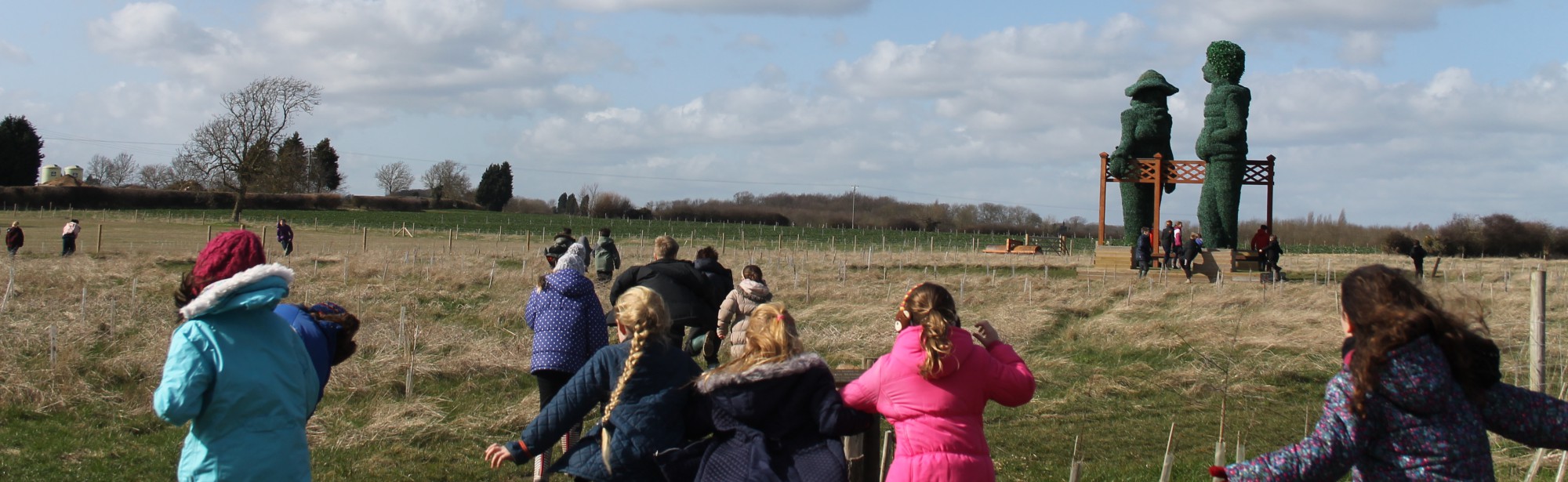
The availability of outdoor space even affects the development of children – there’s even a condition attached to lack of outdoor play – Nature Deficit Disorder. Generally I’m sceptical about this sort of thing, but having seen what happens when you put a group of kids in the middle of a field I’m a convert.

Sadly, the UK is slow to learn the benefits of being outside.


First day of the next week

It’s the end of January and the first day of a new week. Being accurate, I suppose it’s the second day of the week, but it always seems like the first. It’s certainly the one that I treat as being the first working day of the new week. Julia, working from 6.00 to 16.30 on Sunday, doesn’t really share my enthusiasm for Mondays.

We originally said we’d have January off, and without us actually doing anything it seems like it’s going to work out just right.

Julia is looking about 10 years younger with the responsibility of running Quercus and the Centre lifted from her shoulders and is slowly becoming more cheerful. Meanwhile, I can feel my enthusiasm returning.

Julia has already had a couple of enquiries from people about her availability for work, but we’re taking things slowly and making sure we only take on work that suits us.

Nobody has asked me if I’m available yet, but I’m trying not to take it personally.

Julia decided to do the laundry this week as she doesn’t altogether trust me with delicate whites. I don’t either, to be fair, which is why I don’t own any. I do own a white shirt, which I wear with one of my two ties for special occasions. White shirt and black tie for funerals. White shirt and rugby club tie for weddings etc.. Everything else can be taken care of by a coloured shirt. (For these purposes lightish grey counts as white).

I went to the park and then shopping. They have been cutting trees on the island in the duck pond. Moorhens, Black Headed Gulls and Wood Pigeons were feeding on the grass around the pond, whilst nothing much was happening on the pond. The Mandarin, the Greylags, the Heron and about half the Tufted Ducks were all absent. I’m not sure where the next nearest pond is – I will have to look into it.

I’m currently perfecting some new recipes as part of my new commitment to eating a better variety of healthy food. We had tragically under-seasoned bean burgers bean burgers on Saturday, excellent sweet potato, ginger and chilli soup on Sunday (even if I do say so myself) and Welsh Rarebit for lunch today, which (after three weeks of trying) was just about right.

Now all I need to do is make it again, note the measurements and write the recipes. That’s the worst bit of the job. Apart from eating badly made bean burgers…


A Tale of Two Ducks

Back to Arnot Hill Park and the duck pond again, with two interesting ducks.

One is the Mandarin drake. He wasn’t about last visit, and on the visit before that it was so dull I couldn’t get a good shot.

We have a population of around 2,300 breeding pairs in the UK, with more in Dublin and mainland Europe. In winter there can be as many as 7,000 individuals, including migrants from Europe. All were introduced, either deliberately or from accidental escapes.  In its normal range habitat destruction has reduced the population to around a 1,000 in China, and about the same in Russia. The only stable population is Japan, with 5,000 pairs. It is listed as “declining” worldwide, but is still a species of Least Concern.

The one I saw today, though small, is quite capable of holding his own against Coots and Mallards, two species that are currently getting a bit lively as the breeding season approaches.


The other duck caught my eye amongst the various Mallard hybrids is a pleasantly coloured individual with a longish tail that resembles a Pintail. The shape of the neck ring, from certain angles, also resembles a Pintail.

I looked up hybrid ducks and found several records that look like this, plus an analysis of how they happen. Mallards have a bit of a reputation for overly enthusiastic mating and this is one of the results.

The photograph of the duck lacking head was a mistake, but is the only one showing the green speculum which is a feature of this cross-breed.

It’s amazing what you can learn from looking at a duck pond.

Birds in Sherwood Forest

These are the bird photos from the trip to photograph the oaks in Sherwood Forest. It was a bit dull and the birds were quick (unlike the oaks) so they aren’t quite as sharp as I’d like. I missed a couple of Coal Tits that came down to feed, plus Blackbirds, Chaffinches and Dunnocks that lurked in the undergrowth. There were two pigeons too, but I ignored them as I don’t want to encourage them to steal food from small, cute birds.

It’s a lot better than Rufford from that point of virw, as there are more pigeons there, plus a lot of gulls which can polish off a handful of sunflower hearts like magic.

I filled three feeders in the car park and heard a clattering behind me, as birds started feeding before I’d got out of the way.

I need to work out a better way of doing this. Do I just fill one so I can stay focussed on it all the time, or do I fill six so they don’t chase each other away all the time? Even with six there were probably enough Great Tits to chase everything else off.

They were changing places so fast that once I pressed the button to take a Great Tit and ended up with a picture of a Nuthatch!  OK, my frozen fingers were moving quite slowly, which would have helped.

I presume the cold was one of the reasons they were feeding so eagerly.