Category Archives: Foraging

Nettles at War

This is lightly edited version of the article that first appeared on the website of the Peterborough Military History Group, hence the references to local places. That version can be found on the Research page of the Group website. And if you live in the area, new members are always welcome.

I imagine we are all familiar with the Stinging Nettle, or Urtica dioica as the botanists call it. They certainly form a significant part of my memories of childhood misadventures. The word Urtica is derived from a Latin word for sting, or burn, which is appropriate. They are a good source of food for caterpillars, make a nutritious soup, and have a number of uses in traditional medicine.

British Prisoners of War captured during the attacks of 21 March 1918 were held in poorly organised camps because the Germans were unprepared for the number of prisoners they took. Some of them, according to post-war newspaper reports, were reduced to eating nettles. Even British troops who weren’t prisoners were advised to add nettles to their stew to prevent scurvy.

The stings are easily deactivated by cooking or simply by cutting the nettle down. They inject the poison using a pressurised system, and if you cut them they wilt, lose pressure and stop stinging. You can eat the leaves raw without getting stung once this happens. I’m not recommending it, just telling you it can be done. In other words, if you try it and sting yourself –  tough!

Stinging Nettle

Romans used them for food and medicine, and there are references to legionaries in the German campaigns whipping themselves with nettles (known as urtication), which kept them awake on sentry duty, made them feel warmer and, possibly, reduced pain in sore joints. Native American traditional medicine also uses nettles in a similar way, with modern research seeming to support the idea that stings help with the pain of arthritis.

The stories that the Romans introduced nettles to this country are untrue, as we had nettles long before the Romans arrived. One source of knowledge about the early use of nettles is the Bronze Age site at Must Farm, near Peterborough. A half-eaten bowl of nettle soup was found, as were a number of textile samples showing that the inhabitants had used linen, nettle and tree bark fibres for various purposes a thousand years before the Romans arrived. Linen and nettles were used for producing cloth (the process of extracting the fibres is similar for the two types of plant) and the tree bark fibre was used for fishing nets. It seems surprising that cloth made from wild plants would still be needed when they could grow flax and produce fine linen, but despite our instinctive thoughts about rough nettle fabric, it actually makes a soft, high quality cloth.

Cotton started to appear in Europe in the 16th century but nettle cloth was commonly used in Scandinavia and Scotland, where it was known as “Scotch cloth” until the 19th century. It was mainly used for tablecloths and bedding.

The Central Powers imported a lot of fibre before the war – cotton from India and the USA, wool from Australia and Argentina. These markets were closed by the war (though the USA did continue to deal with the enemy for a considerable time, and complained about the restrictions the British put on trade).

The shortfall had to be made up from somewhere, and civilian clothing was made from a variety of substitute materials, including paper and reclaimed wool. This wasn’t sheets of paper, it was clothing woven by using specially produced thread from chemically treated wood pulp. In 1916 the German Government took over the clothing industry. The private sale of second-hand clothes was banned and they also regulated things like the length of dresses, and requisitioned many types of textile, including old blankets, and linen-backed maps. Reports indicate that scarecrows in Germany were stripped of their clothes to provide material for recycling, though this has a whiff of propaganda about it. After all, reports in 1914 indicated that Berliners had eaten the elephants from Berlin Zoo due to a lack of food. They hadn’t. They were in service as draught animals, which is a whole new article.

Nettle – courtesy of Wikipedia

However, uniforms did have a hard life and the high command recognised that it was false economy to produce poor quality kit, so these methods were mainly used for civilian clothes. The answer for the military, looking for high quality cloth, was nettles. They weren’t the first army to use nettle cloth, a century earlier Napoleon had also been blockaded, and had been forced to look for alternatives.

That was where “natural silk” came in. As the need for a cotton substitute became pressing, a researcher called Gottfried Richter, drew the attention of the authorities to the traditional uses of nettle fabric and large quantities of nettles that were readily available. The cloth produced from nettles is easily comparable to cotton, linen or even silk and has a number of advantages over wool or cotton, such as being hard wearing, resistant to shrinking and having natural anti-bacterial properties.

A report in the Evening Despatch (28 February 1916) reports that “Germany has access to large amounts of land in Belgium and Russian Poland where they will be able, in time, to grow flax and hemp. Jute stocks are nearly exhausted and there will be no more until after the war” (most of the world’s supply being grown in Bengal). The article also reports that “the Austrians have planted large amounts of nettles and “nesseltuch” (nettle cloth) is widely advertised in the newspapers”.

Just like the British, who sent people out to gather natural produce during both world wars, the Germans asked people to go out gathering nettles. They also cultivated nettles, and planted a large amount in the Danube valley. One article states that the German nettle harvesters were mainly school children and they harvested 10,000 tons of nettles to produce 1,500 tons of fibre. A shirt requires 45kg of nettles, and an area the size of 1½ football pitches can produce enough fibre for 100 shirts. The yield is a little over half the yield you would get from flax, but the cultivation, particularly as many of them grow wild, is a lot easier.

German Poster from WW1 – courtesy of Imperial war Museum

It wasn’t just clothing that used nettle fibre, it was also used to make cordage, nets, sandbags, sailcloth, straps, harnesses and backpacks. The nettles aren’t just a source of fibre, they are also a source of green and yellow dye.

By 1918 the Tewkesbury Register (07 December 1918) was able to report on “The Useful Nettle”, telling us that captured German uniforms were found to be made from nettles and listing other uses, including being a substitute, in early spring, for spinach, as the basis of a stout and serviceable paper and as a substitute for hemp in cloth and cordage.

In the Second World War. Germany was, again, resource poor and used nettles for textiles, even making parachutes from nettle cloth. Nettles were also one of the wild foods gathered by the German people, who along with most European nations, suffered from severe food shortages during the war.

They didn’t use as many nettles this time as they had plenty of rayon, a synthetic fibre produced from wood pulp treated with acid, which was easier to produce than nettle cloth. In pre-war uniforms the mix was 70% wool and 30% rayon with a linen lining. By the end of the war the linings were 100% rayon and the rayon/wool ratio (which by now used a lot of recycled wool) had shifted to just 30% being new wool.

The UK, on the other hand, despite being a major manufacturer of rayon (for parachutes in WW1, and for fabric and tyres in WW2). used nettles more than they had in the Great War. It was a simple equation – if you could produce something at home it saved space on a ship. We had to import the wood pulp used to make rayon so home grown nettles saved shipping space.

At Kew Gardens, plant scientists began to examine new uses for plants. One of the things they looked at was paper. Paper was always short during the war, as much of our pre-war wood pulp had come from Norway and the Army used a lot of paper. We could have brought it in from Canada, but that would have taken precious shipping space. In 1940, newspapers were restricted to 60% of their pre-war production and by 1945 they were down to 25%. Paper was salvaged and recycled, wrapping paper disappeared and burning it or throwing it away, was made illegal in 1942. Fortunately, nettle fibre was suitable for paper making, which helped alleviate the problem, and so , the paper drop tank was born, a construction of paper, glue and lacquer that held together just long enough to provide the fuel which allowed P51 Mustangs to escort bombers to Berlin.

They are a fine example of the balance that was needed in any scheme during the war. Paper was short, but metal was even more precious. By using paper drop tanks they saved metal, and also, when they jettisoned the empty tanks, they weren’t giving the Germans anything useful. Approximately 13,000 of these tanks were made, saving a lot of metal.

We also made fabric from nettles, and extracted fructose, a form of sugar from them. Chlorophyll had a number of medical uses, including being used on dressings. Nettles, along with alfalfa and spinach were one of the three best sources, and research at the time indicated that chlorophyll was effective in promoting the healing of burns and infected wounds (probably slightly better than penicillin), but when the two were used together the healing time shortened dramatically. It could also be used to produce a green dye, about 90 tons of nettles being used by the army in WW2 to dye camouflage nets.

Nettle Soup

School children became the preferred harvesters of nettles and the newspapers reflect this, though local references are sparse. The Northampton Mercury (22 August 1941), which refers to the WI at Geddington and their activities in collecting medicinal herbs, which they sent to wholesale druggists, and nettles. They were helped by local school children and teachers. Meanwhile, the WI at Earls Barton had a talk on Charles Dickens, and at Isham they were busy selling jam to raise £50 to buy a Bren gun.

At Donington, reported the Spalding Guardian (17 July 1942) Mrs Taylor (WI President) thanked all concerned in collecting 37ibs of nettles, including the scouts, who contributed 10 ibs of leaves already stripped from the stalks – a lot of leaves.

The Northampton Mercury and Herald (4 August 1944) tells people that efforts are to be concentrated on collecting rose hips as there is a need for vitamin C. Forty schools were acting as collecting depots (paying children 2d a pound). In 1943 Northamptonshire collected 14 tons of rose hips.

The first record we have of nettle fibre is finding used in Ancient Egypt in mummy bandages. It is still relevant today, as they use fewer resources and chemicals than cotton, and can be grown in Europe instead of being shipped in. Some exclusive fashion outlets use nettle fibre, but much of that is currently produced from Himalayan nettles, which isn’t sustainable. Currently, De Montfort University has a research team working on nettles so you never know, we could all be wearing nettles in the near future.

And just one extra point, to show how nettles are still used today – the dye made from the chlorophyll of nettles is now used to colour food, and has its own E Number – E140.

Nettle with Spider

An Avocado Day

The day started badly when I woke at 6.20 am and found that my hopes regarding my knee (which had become very painful during the course of the evening) had come to nothing. Despite having rested, it was still painful. Fortunately I had taken a walking stick upstairs and was able to make it to the bathroom without too much cursing.

I took ibuprofen, even though they interfere with the warfarin and went back to bed. I couldn’t find any paracetamol and the ibuprofen gel was, inconveniently, downstairs.

At 8.10 I woke again to find that the ibuprofen had lived up to my expectations and done bugger all to alleviate the pain.

That’s what I find about painkillers these days. The ones you can buy at the supermarket don’t do much to help with the sort of pain I get as old age creeps on, and the ones that work, like laudanum, are out of favour. You can’t read a depiction of Victorian life without tripping over gallons of the stuff but, despite the insistence of the Conservative party on returning to Victorian values, you just can’t get hold of it.

By the time I got downstairs the post had been, as had the bin men, and there was a letter waiting for me from the anti-coagulant service. I have, once again, managed to hit target with my recent blood test and have been rewarded with an appointment in August.

This amazes me, as I have a bad habit of often taking the pills either too late or not at all. My phone sounds an alarm at 8pm and I tend to switch it off with the words “I will have to take my pills in a while.” There are always better things to do at 8pm.

A quick shout out for the posties and bin men here – they are doing a great job keeping civilisation going, but they aren’t complaining and they aren’t getting the thanks they deserve.

We had a TESCO delivery last night at 9pm (because it’s cheaper at that time) and it was much more accurate than the ASDA delivery last week. As a result we were able to breakfast on bacon sandwiches made using croissants and our new supply of brown sauce. Life does not get much better…

I also picked up my new warfarin prescription from the pharmacy and took advantage of that to buy a box of co-codamol. It’s not laudanum, but as I write, ten hours after taking two tablets, I have nothing more than a dull ache in the knee. You are only supposed to take it for a maximum three days but I’ve never needed to take more than a couple of doses before it’s sorted me out. Strangely, despite the three day stipulation, it comes in a box containing enough for four days.

I then made lunch, consisting of sourdough rye bread and avocado – I seem to have become much more middle-class during lockdown – with finely chopped wild garlic leaves which Julia had foraged whilst out walking in the local park.

After that the day became less interesting.

Avocado and Wild Garlic

Avocado and Wild Garlic

Yes, it’s the same picture, but I like to add two photos where I can. Note the square plate, which I always consider a sign of gastronomic sophistication. I bought several in my abortive bid to become a food blogger.

It’s really avocado, wild garlic, coriander leaves (and stalks) and black pepper. The rye sourdough was a TESCO substitution for ordinary sourdough, which, after last week’s bread substitution from ASDA suggests that TESCO is a better supermarket for home deliveries. At least they understand bread.

Gotcha!

It’s taken five days and a lot of sneaking about, but I finally managed to get a picture. It’s a bit misty, but that’s what happens when you take photographs through a dirty window.

The flowers are starting to come out too, though spring in this area is advancing by halting steps.

The goosegrass is doing well and this year I’m going to try eating it. I’ve just tried a few bits raw and though the hooks do give it a strange texture it wasn’t too bad, with a bit of a pea taste. I’m going to check out some recipes and give it a go on Wednesday. Will also be picking the first of the nettles for soup and quiche. They say that real men don’t eat quiche, but I’m not sure if that still applies when you make it with nettles.

Purple dead nettles are both showing well, though there is no ground ivy yet. Of the staples, we don’t have much chickweed yet and the mallow hasn’t really started. There are a few borage plants starting to show but no Fat Hen yet.

I will add things to the Wild Food page as I try them. I’ve just been making a few additional notes – things like Fat Hen soup was OK and never eat stonecrop, though to be fair I don’t suppose many people will try eating stonecrop. You have to be desperate for content to do that.

More later, but I’d better get back to “proper work” now.

More on sloes

Further to the last post I’m happy to report that I managed to find two bottles of Sloe Vodka left over from previous years – one is a delicate pink from last year and the other, from three years ago, has taken on the red/brown colour of old port. I don’t think it has matured in the bottle – just that the older sample was darker and less well filtered to start with.

I have also done four hours research (I use the term loosely – it was the internet) and I am now a sloe expert.

Strangely, when looking for words to describe my newly self-declared status, it was a bit of a struggle. There’s something immodest about calling yourself an expert (even in jest). The words that come to mind are mainly from other languages – fundi, guru and maven all spring to mind. I should probably reflect on this meaning that we Brits are a modest race, but I’m sure there are other, better qualified people to do this.

The problem is that fundi and maven aren’t widespread in England and to call your self a guru is to invite a measure of suspicion, as the word has a number of negative connotations (unless you move in circles that refer to “touching base”, “running it up the flagpole” and “singing from the same hymn sheet”.)

Talking of business cliches how about this – “allocating budget to a delivery structure”. It’s a lot of words that mean “do things” whilst pretending that we have (a) a budget and (b) a “delivery structure”. It has inspired me to start a list of such things.

So, here I am, an expert.

OLYMPUS DIGITAL CAMERA

I now know that the best way to make sloe gin. You use cheap gin, or expensive gin. You add sloes that have been picked after the first frost, picked in late summer, frozen, pricked or bashed. Then you add no sugar, some sugar, half the sugar or lots of sugar – because you don’t need lots of sugar or can always add some later (in the form of sugar or syrup).

See – all you need to know about sloe gin – written by experts, people who have been doing it 50 years, people with chemistry degrees, winemakers and people who have just started making it but have read about it on the internet.

You now know as much as I do, but didn’t have to spend four hours doing it!

All you need to decide now is whether to prick the sloes with a thorn from the tree, a silver pin, an ordinary pin, a fork or a device made from cork and multiple pins.

Oh, and you need a position on osmosis.

Now you’ve read all that send me a fiver and I’ll send you a certificate to print out.

Or you can come down to the farm next September to attend our Sloe Gin workshop (yes, I’m serious – putting it together now).

Got to go now – sandwiches to make.

Will be back later.


Quick week, sloe sherry

Thursday went by in a flash and Friday wasn’t much better, so it’s now Saturday and this is another of those catch-up posts.

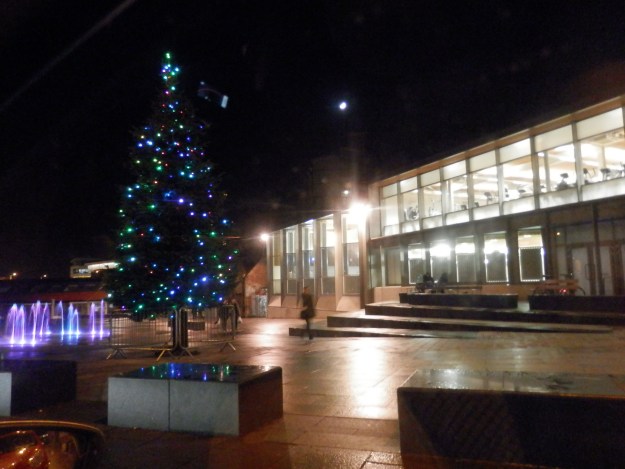
First photo is a night shot of the Christmas tree and fountains at Sneinton Market. Technically it isn’t great but it has the tree and fountains and I thought I’d be a bit festive.

OLYMPUS DIGITAL CAMERA


The rest of the time, when I haven’t been catching up on my reading of other blogs, has been taken up with parties, Men in Sheds, sloe gin, sloe sherry, looking up recipes, tidying cupboards and procrastination.

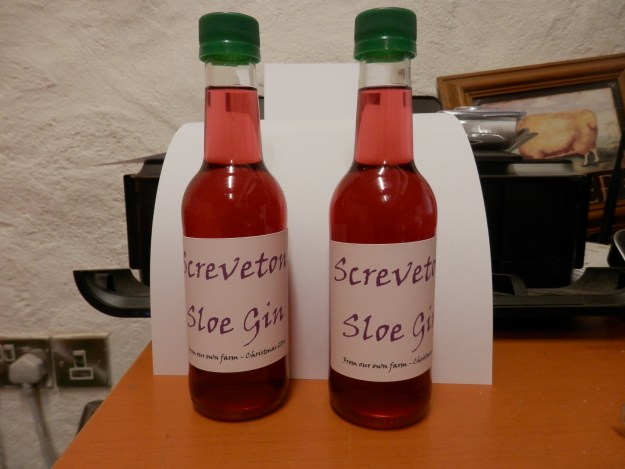
The sloe gin is looking a bit light, though it often does in photographs, but is tasting OK. I’m also making sloe sherry this year, a drink I didn’t know existed until a couple of months ago. After bottling the gin I put the sloes back in the bottle and covered them in a bottle of Sainsbury’s sherry. Yes, it’s that simple. The choice of sherry took more time than the “making”.

In two months I expect to have a dark, sloe flavoured drink that is also good added to stews and gravies. I say “expect” but as yet I have no personal experience. For £5.50 it’s a gamble worth taking.


Meanwhile the “shed” is making progress. We now have the skeleton of a vestibule, so the wind won’t be so much of a problem from now on. We also have the stud work up for a wall to shelter us from wind from the back door. Yesterday we sited the chalk crosses on the walls where our new sockets are going to be fitted, so things are looking up. At the moment we’re using just two sockets and a rat’s nest of extension leads, which is, to put it mildly, a practical and Health and Safety nightmare.

Imagine that you are working on the lathe when someone wants to plug the kettle in. It’s rare we manage this without either the lathe going off or one of the lights going out.

Two more donated filing cabinets were delivered yesterday (meaning we have more and better cabinets in the shed than we do in the office).

By the time we come back in January it will be a lot better from so many points of view.


The Joy of Lists

There just seem to be too many Fridays in my life.

At this point I ought to add that I don’t want to relinquish any of my remaining days, just that it would be nice to slow things down a little.

That’s why I’m spending some of my precious time writing plans. Things tend to get done when you write them down, whilst things in your head tend to slip by. Things like the Wild Food page, which has been dismally neglected of late.

I’ve now started a catalogue of plants to be foraged, as I want to eat more wild food next year and run more sessions about foraging. The result is that I find I know about a lot more plants than the ones I normally talk about, but I’ve also discovered a new plant in the garden. What I had thought was just another colour of dead nettle is in fact ground ivy. I’m pretty sure, looking at the pictures, that we also have henbit around the place. I really need to pay more attention.

OLYMPUS DIGITAL CAMERA

Ground Ivy

In this case it doesn’t make much difference, they are just three more sets of small salad leaves with a few medicinal uses, though if you ate a lot of ground ivy it may prove toxic. Like so many things “a lot” is probably more than you’re likely to eat, like the toxic dose of chickweed, which I’ve seen listed as “several kilos”. I would have trouble eating several kilos of anything, even bananas, so I should imagine that if you manage to eat that amount of garden weeds you have more problems than poisoning.

I’ve also found some more wood sorrel. I think it’s the purple variety of creeping wood sorrel – Oxalis corniculata var. atropurpurea – as we foragers say. I tried some that was growing in a pot in the polytunnel earlier in the year and it is remarkably clean and lemony in taste. If only all foraged leaves were as nice.

OLYMPUS DIGITAL CAMERA

Creeping wood sorrel – purple variety

After two days of making sure I work on my foraging knowledge for a couple of hours a day I already feel like I’ve accomplished as much in two days as I did in the preceding two weeks.

I’m going to be making a list of recipes to try too, so the Recipe page should start being more active too.

And before anyone says it, yes “typical man” and his lists.

A Feast of Lemons

If life gives you lemons, they say, you should make lemonade (though I actually spent the afternoon making apple juice in our newly delivered 250ml bottles).

They don’t tell you what to do to the person who actually hands you the fruit, but if you’ve read my posts before and have a reasonably active imagination I’m sure you can work out that I won’t be handing them over on a silver salver.

OLYMPUS DIGITAL CAMERA

In short, our growing area has been repossessed by the farmer who has decided that he can make a better job of running it than we can. He waited until we went away for a few days then moved in to “clean up” – a process that included felling most of the cape gooseberries (currently selling at around £10/kilo) and some of the tomatoes.

To be fair, he’s not wrong, it wasn’t a traditionally tidy allotment, but you need weeds for wildlife and foraging and you need nettles for nettle soup. We haven’t had the time to work it properly this year and since becoming enthused by vegetables, the farm has been able to put a lot of labour into tidying their half of the plot, making ours look even worse.

He’s a personable sort, prey to sudden enthusiasms and difficult to fall out with, but when you come back to find useable crops dumped on the compost heap it’s hard not to think bad thoughts..

However, I’m not going to waste time, energy or health worrying about it. We still have our own polytunnel and “vertical veg” just became my main interest.

Second lemon – the Forest Schools have stripped all the blackberry bushes between us and them. There are, as I always tell people, very few rules of foraging. One, in order of importance, is only put it in your mouth if you know what it is. Two, almost as important, is never to strip a plant – leave some for other foragers and for the wild creatures who rely on it for food. It’s  a question of manners for us – a question of life or death for the animals.

The third is about never picking below three feet high in a dog walking area.

Next year I’m going to go down early in the picking season and pick what we need. I’m then going to film myself applying copious amounts of personal liquid waste (as Bob Flowerdew calls it) to the brambles. Hopefully I’ll be able to provide my own after my current problem is sorted out. If not I have access to gallons of urine each week from the separator toilets.

After they’ve stripped the bushes I’m going to blog on the subject, provide them with a link to the film clip and sit back smiling.

Wednesday (Part 2)

I’ve now added another piece of foraged food to the list (and will be writing it up in the Wild Food section shortly. Day lily buds. We don’t have many lilies but after watching several school groups grab pieces for their nature bling activity I decided that I may as well have one.

It was quite good. Fresh-tasting, a touch of onion and a flavour of something else I can’t quite place. I would, I thought, be happy to eat them again, particularly sauteed in butter or tempura style as often recommended. However, when I sat down to look at some websites I noticed as phenomenon I’d seen before.

Before you eat something all the websites are glowing, positive and eager to tell you there’s no possibility of misidentification.

After you eat it they are all more cautious. It’s a story much like the dahlia story – there are so many cultivars people are no longer sure what is edible and what isn’t – though in the case of dahlias this revolves around taste rather than possible side effects.

The general feeling is that they want somebody to sit down and eat all the available cultivars, making notes as they go. Sounds like my dream job – eating stuff in an attempt to cause illness and not being paid for it. I wonder why nobody is doing it as we speak…

I’ll cover this more in the Wild Food section

We’re now bottle-feeding a kid. It won’t take a bottle so we’re using a tube at the moment. It seems to be perking up but I’ve learnt never to expect too much from these situations. That’s the best bit of being on the farm without being part of it so we can take the benefit of cute animals without the emotional investment of sitting up all night feeding them. I say “we” but I am absolutely brilliant at delegating. Or lazy, as my wife would have it. She still hasn’t forgiven me for the dik-dik incident.

OLYMPUS DIGITAL CAMERA

OLYMPUS DIGITAL CAMERA

P1010007

I spotted this unusual sprig of variegated mint while I was walking round with the camera. Can’t make up my mind whether to try and breed from it (in case anyone wants to grow anaemic mint in the garden) or leave it. So far I’ve left it. In due course I will probably read about a plantsman who is running an Aston Martin on the proceeds of breeding “Ghost Mint”. Then again, perhaps not.

OLYMPUS DIGITAL CAMERA

Pigs in chamomile

We’ve also viewed piglets, spotted butterflies, captured a mint moth and evicted it from the kitchen and, finally, given Tim (the Xmas Elf) his going-away card. He’s off to work in Europe, though at the moment he’s finishing cleaning up the bee equipment. This involves flame, scrapers and a cloud of wasps.

The cloud of wasps isn’t strictly necessary but it came along anyway.

End of the week

It’s 4.30pm on Saturday (though I won’t be posting until later), or 1995 if you follow the other form of dating I’ve been using. In 1995 I’m married with kids, happy and couldn’t tell you what was happening in the outside world because I didn’t have time to notice.

Wikipedia tells me that John Major called a leadership election to confirm his leadership of the party. I mention this only because it gives me chance for a John Major anecdote. I met him once and was introduced. About an hour later I met him again and he remembered my name. There was no need for him to have done that and it struck me that a man who could remember names like that, and appear to be pleased to meet you for a second time, would probably rise high in politics. He did.

There’s probably room for a whole digression on leadership and what it takes to succeed in politics here, but it wouldn’t be as interesting as cookery and gardening. I wish I’d realised that years ago.

Here are some pictures of a Wild greens quiche with guinea fowl eggs. My wife is making me describe weeds as wild greens now. Some years ago we went through a similar process with a product I now call “manure”.

It’s onions, blanched nettles and fat hen in  a ready made pastry case. After adding the eggs and milk I dropped torn up chive blossom, calendula petals and whole borage flowers to the top. I will have to work on preserving the colour of the petals.

OLYMPUS DIGITAL CAMERA

OLYMPUS DIGITAL CAMERA

OLYMPUS DIGITAL CAMERA

The water I blanched the nettles in took on a lovely green colour after just a minute or two of steeping and after removing the leaves I drank it. Much nicer than the cup I made earlier in the week, and much fresher tasting, though it did have overtones of calabrese. Compared with overtones of fox I’ll go for that.  With hindsight I should have strained the insect shaped bits out of it, but I’m not a vegetarian so no harm done.

We have another school next week, a planning session, part one of my takeover of the catering side and I’m going to do some cuttings with willow water. The comfrey plant food is decidedly murky now – you wouldn’t want to swim in a pond that colour- and the indoor salads are really getting a move on now, in contrast to the disappointing outdoor salads.

Finally, after seeing my display of Wild Salad at the Open Farm Sunday I’ve been asked if I can do one at a buffet in  a few weeks time. My weedy fame is spreading!


Chives and Calendula

It isn’t a combination you hear of often, though they do both feature n my edible flower and weed salads, and may do so again as I try to feed garden weeds to the visitors on Sunday.

Today they are together by coincidence. I’ve been meaning to have a go at a hand cream for a while as my eczema is coming back and my hands are starting to crack. I’ve looked up a recipe and I knew I was dead-heading this week ready for Open Farm Sunday (sorry to mention it again) so while I was taking the seed heads off I also picked a good selection of flowers (trying to get as many orange ones as possible) . It worked out at 26 flower heads to two thirds of a jar. They are now steeping, and I will see how it goes. I have also traced last year’s beeswax so may be able to source both flowers and wax from the farm. Theoretically I could source the oil too as we are growing oilseed rape this year and also planting sunflowers as game cover. However, hand pressing my own oil isn’t my idea of fun as i don’t imagine it coming easily.

OLYMPUS DIGITAL CAMERA

The other project is chive blossom vinegar. Unlike the hand cream, which has been at the back of  my mind for some years, I didn’t even know this existed until two days ago. It took a couple of jugs of flower heads, a brief struggle with some bumble bees (don’t worry, I left them plenty) and some warmed vinegar of two different sorts. One lot is in white malt vinegar and the other in cider vinegar. It’s not actually an experiment, it’s just what I had in the cupboard.

OLYMPUS DIGITAL CAMERA

The recipe, if you can call it that as it’s so simple, is now on the Recipe Page under the Resources tab. After two days the vinegar has already taken on a fierce pink colour – not really sure how to describe it.. It also tastes quite good, though I do know that I’m supposed to leave it a lot longer yet.