Category Archives: nature

Flamborough Head

Flamborough Head is a chalk outcrop on the Yorkshire coast. It is the site of the UK’s oldest complete lighthouse (dating from 1669), which is built completely of chalk.  It is also a site with an impressive variety of seabirds, plants and chalk habitat.

We haven’t been there for over 10 years, and it’s a good place for puffins so we thought we’d make the North Landing our first stop on the coast today. We were rewarded by a small flock of Puffins on the sea and several more on the cliffs. The photos were small and hazy but we got better ones later at Bempton, so will add them to that post.

I was luckier with close-ups of insects.

I also saw an optimist staring out to sea, and a wooden statue of a smuggler.

It started off overcast and hazy, but became warmer and sunnier as we sat there. Well, I sat, Julia walked down to the shore.  You can see this from the brightness of the later (insect) photos and I could also tell from the sore feeling on the top of my head, which is a lesson to all bald men.

Looks like I’ve missed another day (it’s now 00.17 on Thursday) – sorry about that. I really must try harder.

After the Bee-eaters


Guess what we did after we saw the Bee-eaters last week?

Yes, as you may be able to guess from the pictures, we went to see the Ospreys at Rutland Water. It was an expedition with several difficulties, one being distance and another being the settings on Julia’s camera. That’s why the pictures have the look of video footage taken on a phone camera.

What happened was that I ground to a halt after two hides, but nobly insisted that Julia carried on to the next one to see the Ospreys. She arrived at the relevant hide to find that her camera was mysteriously frozen, so phone shots of the CCTV were the best she could do. Good bit of lateral thinking.

The fledglings were looking quite lively, and likely to leave the nest quite soon.

Best sightings of the day for me were the damselflies and dragonflies. There were hundreds of Common Blue Damselflies about, though mostly too fast for my camera skills. The Common Darter was quite common too, and darted about. I don’t know who named these things, but they got it spot on. We did see a few others but without photos I’m not too good at identifying them.

OLYMPUS DIGITAL CAMERA

Common Blue Damselfly (male)

OLYMPUS DIGITAL CAMERA

Common Darter (male)


Bee-eaters and Bad Photos

We went to see the Bee-eaters at East Leake Quarry today. I had been planning a visit to Bempton to see the Puffins but Julia persuaded me that we really should visit the rarities. My experience with rare birds is that they have normally gone by the time I get there, or if they are still there I wouldn’t recognise it if it pecked me on the bottom.

Take Richard’s Pipit as an example. They turn up regularly and excite twitchers. To me they’re just a brown bird, as are most of the other pipits.

The postcode is LE12 6RG if you want to pop along. Parking is £5, split between farmer and RSPB. The car park is 385 yards from the viewing area, according to the volunteers at the car park. These things are important when you have a bad knee.

The meadows on the way to the viewing area were full of butterflies, including Ringlet (hundreds of them!), Meadow Brown, Comma, Small Tortoiseshell and Large Skipper. There were some Whites too – but at a distance they all look the same to me. I need to get my eye in again. I didn’t manage many photos as they kept fluttering about instead of settling.

Eventually we arrived at the viewing point. The birds proved to be very obliging, using a selection of dead branches to perch on when eating bees. Julia managed to watch one eating a dragonfly., which I missed because I was watching one posing in the sunlight.

They are bright and exotic birds, but in truth just a little bit garish, like a bird designed for a Primary School project. Still good to see though.

We only saw three against the maximum of seven that have been seen, but with any luck the others are off nesting. There are records of successful breeding in the UK, as detailed in the links at the beginning of the post, so there is no reason why they shouldn’t be breeding. They like to burrow into sandbanks and this is a sand quarry with an active population of Sand Martins, who also burrow into the banks.

Sorry the photos aren’t very good, but the birds were a long way off. It wasn’t just me having problems – the people with the big expensive lenses were having problems too. When the day heats up, things start to get hazy, and this spoils the photo quality. I don’t feel as bad about my photos now…

A Misty Dream

Actually, there is no mist involved, but I think I used the days of wine and roses quote as a title before. I also used it in a comment I made on a blog last night, so I don’t want to overdo it.

Yesterday I visited the local duck pond for the first time in months. Even when I’ve been well, I’ve been tired or out of sorts and the trip has seemed too long. Last time I went the yellow flags were just starting to flower. Now they are finished. Being somewhat morose at present, I can’t help seeing it as a metaphor for my life.

A cup of tea soon dispelled that thought (no biscuits – I’m on a diet) as very few depressing thoughts survive tea and sunshine. Even a comparison to the pond couldn’t dampen my spirits – I’m happy being shallow.

Anyway, enough of the introspection, and on with the character assassination.

Earlier in the year I mentioned that a woman thought the white ducks were swans. I was, I think, a little critical. In fairness I shouldn’t really have a go at her for being as dim as a 40 watt light bulb, or say that there…

No, I still think there should be a permit system for breeding. Two kids per family and none at all unless you’re smart enough to distinguish a duck from a swan.

While I was reflecting by the side of the pond yesterday a group came to feed the ducks, led by a woman who, to be chivalrous, was older than me. This is old enough to know that geese don’t have cygnets!

The pictures show geese with their goslings, some young moorhens and coots and some ducks in eclipse plumage. Eclipse plumage is the dull, almost camouflaged, plumage that ducks grow when they moult after all the hassle of raising a family. I can sympathise.

OLYMPUS DIGITAL CAMERA

Mallards in eclipse plumage

Later there was a small child called Sam (name changed for Safeguarding purposes, and because I forgot it). His mission in life seemed to be to feed birds and use huge amounts of energy as he ran round saying hello to people. I would have been happier if he hadn’t introduced himself to dogs by holding out his arm in such an appetising manner, but even the Staffordshire Bull Terrier with leather harness and tattooed owner merely licked his hand and allowed itself to be stroked.


Helping Insects

You don’t really need to do much for insects, just leave some of the garden slightly untidy. I can manage that. Unfortunately, when you look round the gardens that surround us, I’m one of a dying breed. The neighbours on one side have gradually turned their garden into a hard-landscaped hell over the last thirty years, whilst the previous set on the other side have erased every feature of interest. They also tried to tell me how to manage my garden. I’m hoping the new neighbours on that side might be an improvement. They have given me cake twice since moving in, so I do have reason for optimism.

The featured image is a bug box in the Sainsbury’s car park in Whitby. They did make a big thing about them at one time, with in-store posters, but this is the only one I actually remember seeing. It’s quite an elegant thing, and would grace any garden.

The next group of bug hotels are behind the centre at Attenborough. I just checked the link and see I’ve already shown them. Just goes to show how bad my memory is. The pictures below show some arrangements from Carsington Water  – which can be as simple as leaving a pile of logs.

The one attached to the tree is in the garden of the Bishop’s Palace at Southwell Minster.

At the moment I’m thinking about the best way to get some bug cover in the garden, as we’ve had to clear a lot of clutter to get the garden in shape. Somewhere I have more pictures, but how many do you need to see?

Now, where was I?

Wales, I think.

We’d seen the kites, and we’d ended up eating at Burger King.

Next day we went across Anglesey to South Stack, where I reported unfavourably on the toilets.

The stiff note of reprimand I’d planned for Travelodge has still not been written because, like so many I have planned, I never quite get round to it. My indignation doesn’t last long, which is probably a good thing.

However, I do stand by my original view that a Little Chef (closes 8pm), a Burger King and a petrol station shop do not equate with the words “Guests can enjoy a variety of food and drink choices within easy walking distance from this hotel.”

The choice between Little Chef and Burger King in culinary terms (when you are looking for something nice because you are on holiday) is a bit like the choice between a cystoscopy and a colonoscopy. Obviously my recent hospital experiences have extended my range of comparisons, even if they haven’t done much for my temper.

The trip across was painless, though we did miss using the Menai Bridge. Once at South Stack a cheery volunteer explained what was available, and where to find the Choughs. We soon spotted one flying in and out of one of the sea caves where they were nesting, but it was a long way away and could easily have been a Jackdaw. They were a lot easier to see last time we were there, but that was later in the year.

Two Jackdaws hung about as we walked the cliff top, giving us plenty of false alarms, but we did manage to see plenty of Choughs too. They obligingly called as they flew over, a softer call than the crisper call of the Jackdaws, and more chuff than jack.

We got some good views of Skylarks and Meadow Pipits and a Whinchat. Best views of the day were a selection of Stonechats that we saw in the field with the Iron Age hut circles. I wonder how it happened that 3,000 years ago someone thought “Let’s build houses on the most exposed and inhospitable corner of the wettest part of the UK.”

The bird photos were all poor but several flowers,lichen, a lizard and several buildings did stand still long enough for me to get some decent shots, despite the hazy light. It was just warm enough to wake the lizard but cool enough to keep it slow.

OLYMPUS DIGITAL CAMERA

Footprints of a dog

At some point a dog had stood in some wet cement by the roadside. Roadside grit has blown into the prints to give them some form. I was annoyed by missing all the bird photos so I took a photograph.

On the way back we used the Menai Bridge, which was more interesting than the other one.
Weathering Wood, Bathing Pigeons and Diving Coots

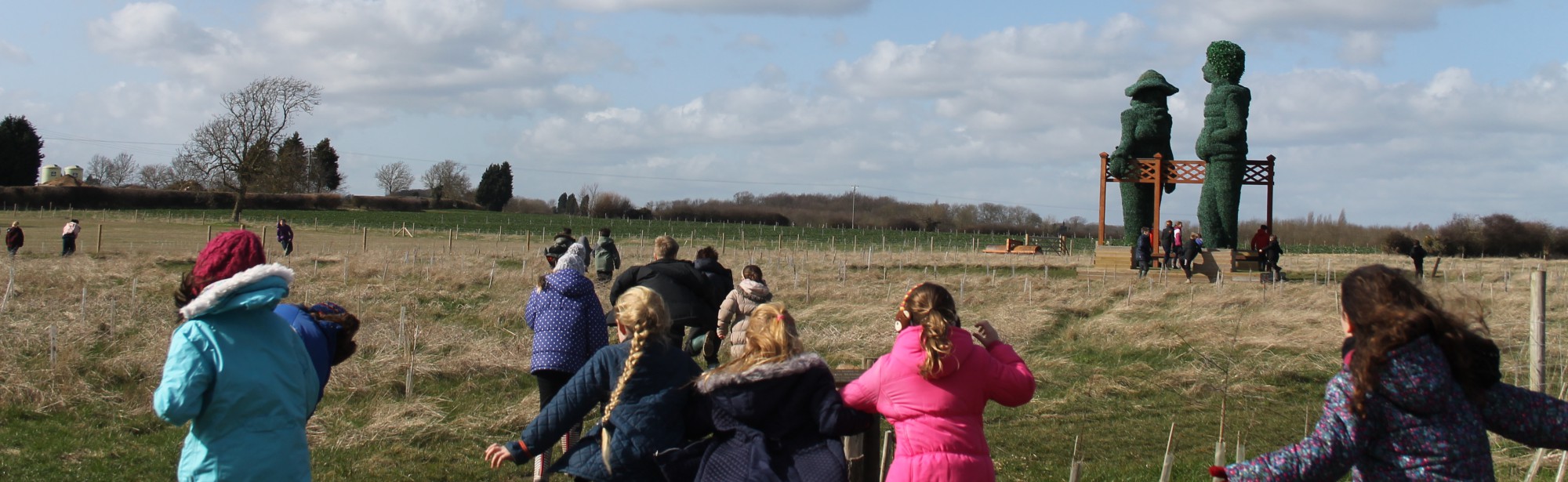
As you can see from the Featured Image the sculpture is weathering and gaining some definition. It also appears to have gained an electric light, though I thought the park was closed at night.

Despite what I say about them our urban pigeons seem addicted to bathing. Julia saw some last week that were showering in the fountain outside the leisure centre.

This is a picture of a Coot diving – quite an energetic performance when you see it. Sadly, when it surfaced it did so just out of shot. Must try harder.

I’m feeling better now I’ve been out and seen some nature.


Partridges, Photographs and Pheasants

After dropping Julia off at work (she works at one of the few centres in Nottingham that wasn’t closed today) I went to look for a sunrise. There was a small one, but as I chased it down it became duller, smaller and less impressive, so I didn’t bother.

I did manage to get a picture of a Red-legged Partridge in front of a backdrop of oilseed rape.

In some ways it’s a picture of all that’s wrong with modern farming – a non-native gamebird against a background of monoculture. As it’s the only decent photograph I’ve taken in the last seven days I’m not going to dwell on that thought. It’s a sign that I’m getting better and have now recovered enough brain power to spare some for photography.

I accidentally photographed a pheasant and missed a hare too.

I spent most of the rest of the day back in bed sleeping (I’m still convalescing, after all) and when I finally got up Number One Son made me an excellent beef and horseradish sandwich using meat left over from tea last night.

We aren’t popular: it seems Julia had earmarked that for tomorrow night’s tea.

If you think I’m unpopular now wait and see what happens when she examines the biscuit barrel.

Tree, rapeseed and a pheasant

Can you see the pheasant?

A Few More Kites

Just a few more photographs of the Kites – I finally found the energy to crop a few into respectability.

OLYMPUS DIGITAL CAMERA

Red Kites at Gigrin Farm

We may call them Red, and from a distance they may look brown like a Buzzard, but in fact they are a stunning combination of grey, black and red-brown, with some looking quite different to others when you see them side by side.

OLYMPUS DIGITAL CAMERA

Red Kite with wing tags

It looks like this one has a wing tag on, which will be colour-coded and numbered. The “proper” photographer in the hide managed to read the number off the tag, but he had much more impressive equipment than I do. I can barely see the tag.

Light blue on the right wing indicates a bird from the Irish Republic.

OLYMPUS DIGITAL CAMERA

Red Kite in Wales

Sorry they aren’t better shots,. I’ve taken steps to rectify the problems with my photographic situation, but I’ve been disappointed by the Lottery before so I’m not going to hold my breath.

The Kites

As you know, we went to Gigrin Farm last week to watch the Kite feeding. It was quite an experience. It seems to be quite a popular thing to do, as there are two other sites who feed kites – one at Llanddeusant and another at Bwlch Nant yr Arian. They may not all offer the number of kites seen at Gigrin, but even 50 kites are a majestic sight.

The growth from a couple of pairs in the 1950s is an epic story. In the rest of the UK they have done it by importing stock from Spain, Sweden and Germany, but in Wales they have done it all by improving the environment. The fact that Buzzards (another big, lazy predator) has recently done well suggests that things are working with the birds (lack of gamekeepers and plenty of rabbits being big factors).

Their predilection for dead prey does help – you can’t imagine Goshawks and Peregrines coming down for a scoop of ground beef.

Things are going so well we are actually using our own Kites to repopulate the UK and have actually sent some back to Europe.

The only place they aren’t doing well is the north of Scotland, a heavily keepered area. You may draw your own conclusions. You  might also want to look here for reports of crimes against Kites and other raptors.

But on a more positive note, have a look at the photos and imagine the loud claps as they strike wings with their neighbours. If you are lucky you can even see the two birds falling from the sky after colliding. Unfortunately I couldn’t catch it on film.

There are other birds on the farm too. What you don’t see is that it then doubled back to have another go at the reflection. I’m not sure it’s good for the mental health of the peacock but it seemed reasonably happy.

Later I will do a post with some photos.