Tag Archives: rationing

The Vegetable that Won the War

The Vegetable that Won the War

“Les carrottes sont cuites, je répète, les carrottes sont cuites.”

For those of you who still remember a bit of the French you learned at school, yes, I have just informed you that the carrots are cooked. It comes from an old French saying based on cookery. In a stew, the carrots are the last vegetable to cook, once that is done the stew is ready. In French this has developed into an expression meaning that something is completed and nothing can undo it. If you were in the French Resistance and had heard that message on the BBC on June 5 1944, you would have known that the invasion was coming next day.

I was actually looking for information of frozen carrots when I found that snippet about D-Day. The hot weather, and thoughts of healthy eating, brought tales of wartime ice cream substitutes to mind. For a moment, I thought of making some authentic WW2 frozen carrots and eating them as a healthy alternative to ice cream. It wasn’t one of those lasting thoughts.

In 1914 we were caught out, as we imported 66% of our food from abroad. In April 1917, despite the limited capabilities of Great War U-Boats, we were reduced to six week’s supply of wheat, We weren’t any better in 1939, with 70% of our food coming from abroad. It’s 38% these days, in case you were wondering. We were, however, more experienced in the ways of rationing, shortages and blockades, and were much better placed to cope with wartime constraints. By the end of the war people were actually healthier on average than they had been at the beginning.

A number of old-fashioned vegetables made a comeback, such as Good King Henry, also known as Poor Man’s Asparagus or Lincolnshire Spinach. It can be eaten as young stalks or as mature leaves and its pollen has been found in Neolithic, Bronze Age and Roman sites. It comes from the same family as Fat Hen (now considered a weed), spinach and (more fashionably) quinoa. It is shade tolerant, could be grown almost anywhere, is self-seeding and can be grown as a cut and come again crop – all useful qualities when you are struggling for productive space. As a general rule, though I have eaten Good King Henry and Fat Hen, there is a reason they were replaced by spinach – the leaves are small so you need to pick a lot, and they are high in oxalic acid, which can be a problem. Having said that, it is packed with iron, which was seen as a good thing during the war as it prevented anaemia in female factory workers, a major concern in the literature of rationing.

Other vegetables assumed a more important role in the garden. Kale, currently experiencing a revival in fashion has always been grown in the north, where it stands up to the weather better than cabbage. It is a tough plant, has a long growing season, is resistant to pests and contains more calcium than milk, so was particularly good for young children. It is also one of the few brassicas that pigeons won’t eat. Other vegetables like swedes, once seen as animal food, became more widely eaten, being able to grow in poor conditions (including bomb sites) and containing more vitamin C than oranges. Parsnips were also seen as important – storing well in the ground, providing sweetness and being a high energy food, with more calories per pound than potatoes.

But out of all the vegetables, the carrot stands out. Potatoes had Potato Pete, and carrots had Doctor Carrot, but only carrots had cartoon characters drawn by Disney – Carroty George, Clara and Pop Carrot. They were also the only vegetable that helped shoot down German bombers in the Blitz, by enabling our airmen to see better in the dark.

Well, that was certainly what my mother told me when she was making me eat them as a small child. It isn’t really true though, carrots can help with night adaption, but only in people suffering from Vitamin A deficiency. To me “Cat’s Eyes” Cunningham was every bit as important as Douglas Bader and Biggles in my mental list of aviation heroes. Cunningham, it is said, was less than delighted with the publicity and the nickname.

This was not the first time my parents lied to me about nutrition. My hair, for instance, never did curl, despite my consumption of large amounts of burnt toast. It was just a propaganda story to confuse the Germans about the increasing losses to their night bombers. It might even have worked, but as the Germans already had airborne radar by 1941 they probably had a good idea of what was happening. It was also put forward as a cure for “Blackout Blindness”. This was just another of those wartime myths – “Blackout Blindness” wasn’t actually a medical condition, it’s just a tendency to walk into things when there are no street lights. However, lots of people were being killed and injured in the dark and any hope of relief was good for morale.

In December 1940 the Ministry of Agriculture sent out a press release. “If we included a sufficient quantity of carrots in our diet, we should overcome the fairly prevalent malady of blackout blindness.”

The truth was that carrots were in plentiful supply and the Government needed to encourage people to eat them. By 1942 the Dig for Victory campaign plus increased farm production gave us a surplus of 100,000 tons of carrots, and the race was on to find a way to use them. carrots. One BBC employee wrote that they could always tell when carrots were available in quantity, because there would be a press release from Dr Carrot – anything that increased the consumption of carrots was welcome to Government departments

In January 1942 they suspended the restrictions of the Home Grown Carrots (1941 Crop) (Control) Order and allowed growers to wholesale their produce free from restriction. Before this, carrot growers with more than an acre of carrots had only been allowed to sell to the National Vegetable marketing Co Ltd. Despite this relaxation, carrot growing as a farmer with over an acre of carrots was quite a complex business with different rules applied if selling them for animal feed, and depending on the time of sowing. It must have been easy to get the details wrong, In September 1941 the Ministry of Food brought 2,501 prosecutions for breach of food control orders, 2,280 were successful.

The market reports for Northern Ireland in 1942 indicate that, despite the surpluses, home grown carrots were insufficient to satisfy the market and English carrots had to be imported to fill the need, highlighting what a complex business feeding a nation can be.

Apart from being an ice cream substitute and a vegetable, a propaganda tool and a cartoon character, carrots could be used as a jam ingredient. Carrot jam had been appearing to cook books for over six hundred years by the time war broke out. There were many recipes for it in Victorian cookery books. However, most of the recipes called for the juice and zest of oranges and lemons. Even one of the official wartime recipes uses them. In wartime Britain oranges were in short supply (and reserved for children), and lemons were virtually non-existent. I assume that it’s possible to make carrot jam without them, but I also assume it is not as pleasant to eat as the modern recipe suggestions on wartime food websites.

The same is true for carrot cake. The 1940s version is a small cake, and uses a few spoonfuls of grated carrot to add sweetness in place of sugar. It is not at all like the monster modern carrot cake. I just selected a modern recipe at random – the cake takes 390g (nearly 14 ounces) of sugar and four eggs. The average ration allowance per person was 8 oz of sugar and one egg a week. Frosting for the modern cake takes another 140g (5 oz) of sugar, though it was illegal, after August 1940, to put sugar on the outside of any “cake, biscuit, bun, pastry, scone, bread, roll or similar article, after baking.” For the duration of the war, ornate icing on cakes was replaced by a cardboard box placed over a plain cake.

However, a piece of dry cake could always be helped down by a swig of Carrolade, a drink made by grating equal amounts of carrot and swede and pressing the juice. Even thinking of it frightens me. The wartime kitchen was no place for the faint-hearted.

And when all other things have been tried, how about using a carrot to engineer the downfall of the Führer? The plan, hatched by the OSS (later to become the CIA) was to bribe a member of staff to inject Hitler’s carrots with oestrogen. This, they thought, would make him grow man boobs and lose his moustache – forfeiting the respect of the German people, or, alternatively, become a gentler person, with less interest in war. There are various theories why it didn’t work, including a double-cross by one of the German agents. Or, like subsequent CIA plots to kill Castro or make his beard fall out, maybe it was just a really bad idea.

Scone Chronicles – 38 – Tea in the Garden

We had tea and cake in the garden this afternoon. As Julia had gone to the trouble of baking banana bread I thought this called for a revival of the Scone Chronicles.

She has been working away in the garden all lockdown and the patio is looking like the sort of place you might find a new species of beetle. Or even a lost tribe.

As you can see, we also had Battenberg, though that came from the shop. Life really is too short to make your own Battenberg. We’ve had Battenberg nearly every week since the start of lockdown, which is one of the brighter spots of the last couple of months.It’s a very reliable cake, and usually cheap. Other budget cakes can be a bit hit and miss, while other, pricier, cakes can be be covered in calories and three or four times more expensive. There is a case to be made which suggests Battenberg is an aid to dieting, but that might be pushing it a bit, even for me.

OLYMPUS DIGITAL CAMERA

Banana Bread and Battenberg

The banana bread was excellent – moist, tasty and light without being soggy or crumbling. Fortunately we still have some left. This is the advantage of afternoon tea at home – plenty of chance for second helpings. I won’t recommend it too heartily as I don’t want to have to queue for a table next time I’m here. It is possible for venues to become too popular and I don’t like crowds.

It’s back to work tomorrow. However, the good news is that I have two days off after that.

As I sit and think, it occurs to me that about 68 years ago my parents were married in the time of sugar rationing. I’m now, despite the recent shortages from panic buying, able to buy more sugar than is good for me. History can be a strange thing.

Later we had banana bread for supper with a nice cup of tea. It was slightly drier than when we had last eaten it, but still good. We have enough left for a couple of good slices, but will probably butter them.

OLYMPUS DIGITAL CAMERA

Is it just me. or does the position of dried fruit and plate decoration make this slice look like a face?


Notes for Posterity

After yesterday, with its snow flurry and snow storm, this week is set to be significantly colder than a week ago. The day started with a miserable grey light, partly because of the weather and partly because we put the clocks forward at the weekend. So far, at 5.30, the day has remained grey and cold, though it has not yet rained. That is a good example of damning with faint praise.

“How was your day?”

“It didn’t rain.”

See what I mean?

The only other notable feature of the day is that it is now six days before we go shopping again. This counts as a significant milestone in a wasteland of tedium.

Today’s food intake, for people reading this in 100 years time, started with a breakfast of 2 Weetabix, milk and two slices of brown toast with strawberry jam. It was actually TESCO own brand, and the bread, being a bit dry, made very dry toast, which disintegrated as I ate it. That’s a bit of detail for future readers.

For lunch we had gala pie with the last of the coleslaw and some spinach leaves and tiny tomatoes. I’d better explain a gala pie for my future readers, as it’s likely to have been declared illegal by 2120. They are not very good for you. They are pork pies with eggs in the middle. With my customary hindsight, I really should have photographed it before eating.

To save you time, the health-related link includes the words “it’s a heart attack in a packet”.

We had a cup of tea in the afternoon with a few biscuits.

There are currently four monster potatoes baking in the oven. I bought “Wonky Veg” on Sunday and it seems to mean “Extra Large” in the case of these potatoes. It will be two for tonight and two for tomorrow, and probably some leftover bits for later.

I’m thinking of Kensington Rarebit for tomorrow.  I found the website The 1940’s Experiment yesterday when I was looking for Woolton Pie recipes. I’m thinking that it may be a useful source of recipes for lockdown.

This, of course, is an example of First World Problems – the food I have on hand would appear like a banquet to most people during the war. Here’s an interesting article on rationing in two World Wars – plus a view of what happens when the government prepares properly.


Foraging, Fear and Eating Flowers

I note that on the internet coronavirus is being linked to the Book of Revelation and the Prophesies of Nostradamus. I won’t add links to any of the relevant sites because I came away from browsing them with the impression that my IQ had been decreased.

For the sake of historical perspective – northern Italy is in lockdown, the third person died of coronavirus in the UK today and in Canada an American tourist booked out of a hotel in Toronto today, telling my son that he wasn’t happy at staying somewhere that allowed an oriental man to stay and to use the same glasses as everyone else in the bar.

This isn’t unique to Americans – people of oriental descent have been abused in the UK by people who believe that looking Chinese means that you are carrier of coronavirus.

The situation is currently showing up the deficiencies in health services, supply chains and stock markets across the world, but it’s also clearly showing that racism and stupidity are close to the surface when people feel under pressure.

In TESCO today, doing my normal weekly shop, I was faced with empty shelves and notices telling customers that we were limited to five packs of pasta per person. I bought one pack of the dozen remaining because we are having pasta bake later this week. There were only a dozen or so packs left on the shelf, but I didn’t feel the need to buy four more. The rice shelves were the same, though there was no notice on them.

It shows how far we have come as a nation. In my younger days we mainly encountered rice and pasta (in the form of macaroni) in milk puddings. Curries and pasta dishes were uncommon and pizza virtually unheard of.

I will go now, as I’ve been avoiding work all day and still have a presentation to finish.

I was happy and calm this morning, with just a bit of printing to do and a few facts to check. As the day wore on I remained unworried.

Now, as the dark closes in and doubts start to surface, the panic is starting to return and I am remembering all the things I need to do…

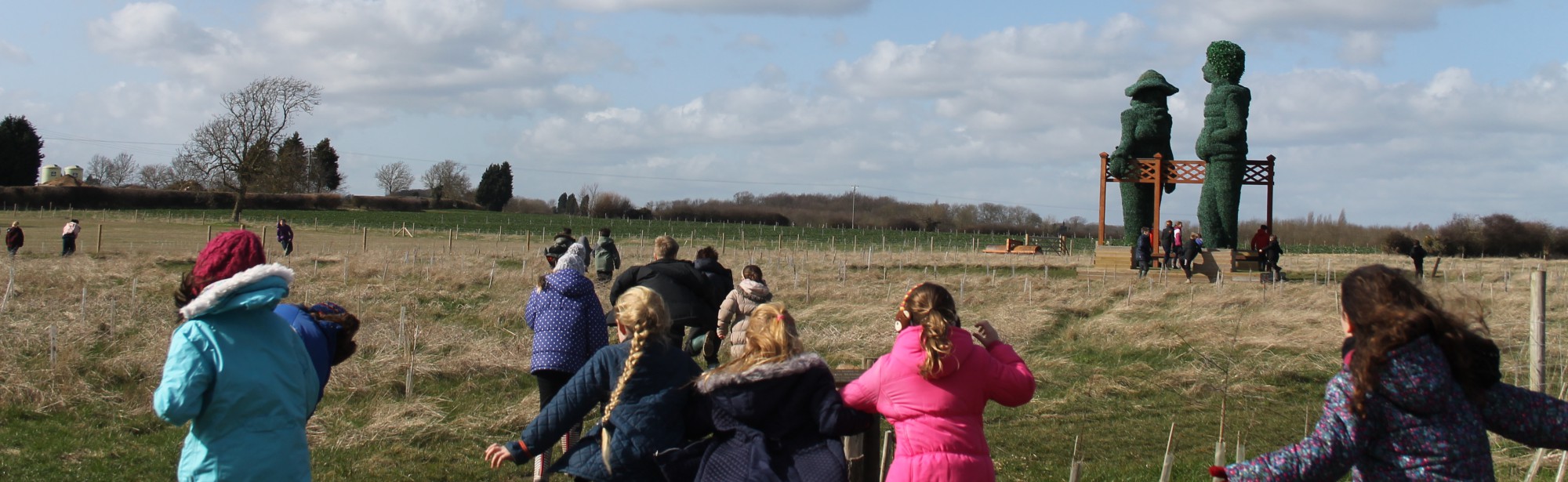
The header picture is a salad of edible weeds and flowers I made years ago when we had a school visit – it reminds me that we can eat weeds if all else fails, and that if I can face a class of eight-year-olds and persuade them to eat weeds I can do anything.


Book Review – Eggs or Anarchy

Eggs or Anarchy by William Sitwell

Paperback: 368 pages

Publisher: Simon & Schuster UK (9 Feb. 2017)

Language: English

ISBN-10: 1471151077

ISBN-13: 978-1471151071

Between the wars the government took the view that we should produce what we were good at and import the rest. This meant we were importing about 60% of our food, as we had been doing in 1914. The problem was that the Germans had more efficient aircraft and submarines in 1939.

Fter a successful retail career, Lord Woolton took on the job of sourcing the millions of uniforms needed to equip a new army. He was surprised to find that having ordered the trousers he had to order the fly buttons via another government department.

He managed to sort it all out, and then took on the task of organising food supplies, including issuing millions of ration books and developing a system that was fair to all.

He didn’t just have U-Boats to worry about, he had Churchill and his attempts to use shipping for moving troops. Then he had to organise storage for food in places where it wouldn’t be bombed, make sure our suppliers didn’t overcharge us and iron out inefficiencies in distribution at home. The title refers to the fears that order and morale would break down if he was unable to get the rations out.

One of my favourite moments was when he told visiting American politicians that he would prefer their ships to their good wishes. He was not a conventional politician, having come to it late in life.

As for the famous Woolton Pie… Well, you’ll have to read the book to find out his thoughts on that.

It’s an interesting subject, though the writing doesn’t always reflect this, and poses a few questions about food security, which we are going to have to answer in the coming years.

Thoughts about renewable energy

I watched The Apprentice last night.

At one time I used to watch in the hope that I might learn something about business. I’ve not learned anything I can use, though I do now know that every year proves there is a seemingly endless supply of idiots.

If I can find a way of converting idiots into electricity I may have found the next big thing in renewable energy.

Talking of which, we drove past another solar farm today.  It seems like every time we drive north from Nottingham we find another new field of black panels. Land use has changed considerably over the last ten years in North Nottinghamshire – first we had willow, then we had miscanthus. Currently we seem to have a small forest of wind turbines springing up and the latest fashion seems to be to cover acres in photovoltaic cells.

OLYMPUS DIGITAL CAMERA

Solar farm in north Nottinghamshire

When I see that I feel more comfortable about using electricity, but then start to worry that we won’t need it, because if we cover the land to generate electricity there will be no food to cook.

I’m a bit worried about food, after listening to a radio programme tonight. In order to halt global warming we need to scale back on meat production (mainly on account of the methane produced by cows) and would, they calculate, only have 19 grams of meat a day. That’s 133g a week, about the weight of two moderate burgers.

In the Second World War the bacon and ham ration ranged between 113 and 227 grams. However, there was also a meat ration, controlled by price – between 1 shilling and 1 shilling and two pence (5 – 6 pence in modern terms). I’m struggling to find a comparison of prices – one I found suggests that could be about £1.50. It’s not a lot, but compared to 19 grams a day it’s a positive feast.

To add to the complexity of looking into the future it also seems that grass fed beef (as generally reared in the UK) is worse for the environment than intensively raised beef fed on maize and soya (as raised in USA). It’s not about the method or the food, it’s about the fact that grass fed beef takes longer to grow to full weight, and thus spends more time emitting methane.

Now, methane is the main component of natural gas, so is it just me, or are other people thinking that some sort of gas-collecting nappy on a cow might be an alternative to fracking? Ah, just me…

That’s not the end to it of course, there’s also milk to consider. If they were telling the truth (and I fear they are) we will only have enough milk for four cups of tea a day.

Four cups of tea a day?

I could see myself as a vegetarian, but I don’t see myself cutting down to four cups a day.

OLYMPUS DIGITAL CAMERA

Under threat – my cup of tea


.