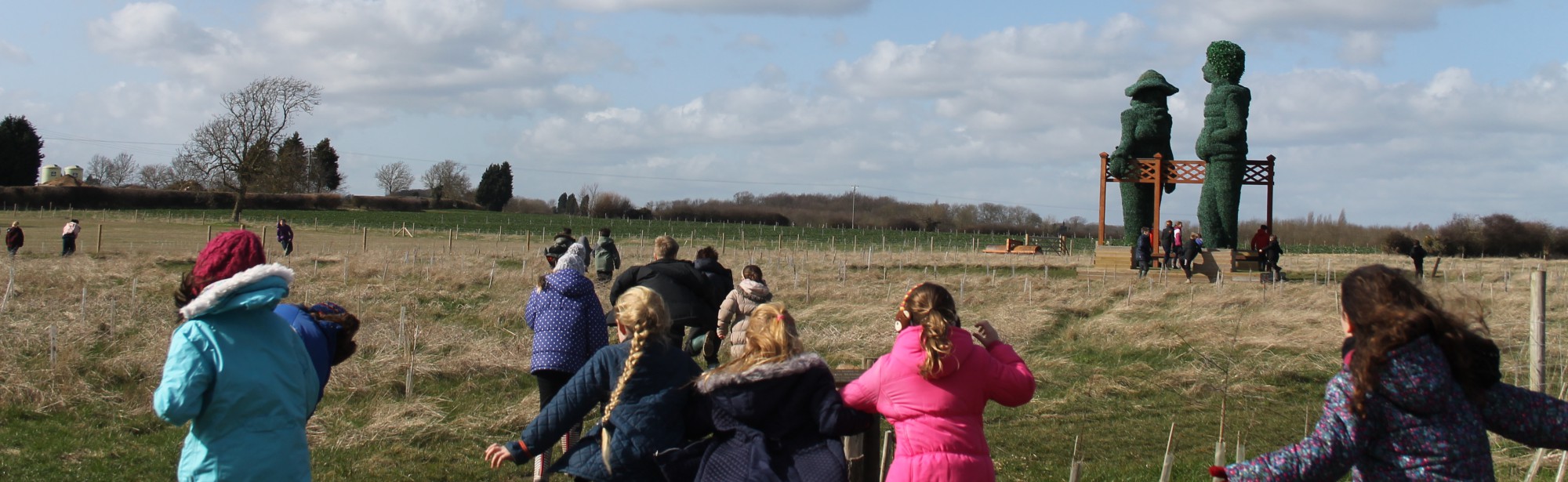


Carving at Sheepwash Car Park – Carsington
This started off as an article for the Numismatic Society of Nottinghamshire, but it’s quite interesting just as a general knowledge piece. Well, I find it interesting. To be fair, as Julia has had to point out at times, whilst yawning, my threshold of “interesting” is quite low compared to many people. I should probably add some extra photos and travelogue type writing, but I’m not sure i have time or skill, and I definitely don’t have the knees for getting extra photos of the Derbyshire countryside. So if you are wondering why it’s a bit dull in places, it’s because collectors like dull detail.
The lead industry in Roman Derbyshire must have been huge, considering the roads they built to service it, and the number of ingots they seem to have mislaid for future archaeologists to find. There is actually a road that runs from somewhere in the region of Wirksworth to the town of Margidunum, which is now a roundabout on the A46 near Bingham. We used to pass it every day when we went to the farm. It’s quite impressive to think that this has been an important road junction for 2,000 years.
It is an ancient industry. Derbyshire lead was mined by the Romans, who left a number of inscribed ingots behind them, and there is a Saxon carving of a lead miner in the church at Wirksworth. The area was the main source of lead in Europe in the 12th and 13th centuries, and provided a good living for those able to cope with poisonous dust, underground floods, falling rocks, methane gas and, eventually, accidental gunpowder explosions. In the 17th century, only wool was more important to the national economy, as lead was in great demand for plumbing (the name coming from plumbum, the Latin for lead), leaded windows and ammunition.

Ammunition in those days was mainly cannon balls and musket balls. Cannon balls were stone initially, and after about 1450 cast iron took over. They say that 42,000 cannonballs were fired at Waterloo, and 9,000,000 musket balls. I have calculated how many tons of lead that is, but there are so many variables it’s not necessarily a useful exercise, but you can see how much lead it took to fight a war. Using various approximations, it came to 250 tons of lead for Waterloo and about 3.5 tons for Naseby, which was a lot smaller and earlier.
There are fields in Derbyshire that are still considered to be unusable for crops or livestock due to Mediaeval lead pollution.
This is a 48mm lead medallion. At first glance it has little to recommend it, being just a grey medal with a plain, low-relief design.. The reverse is the seal of the Duchy of Lancaster and the obverse has a Queen’s Crown in the centre with the dates 1952-1977 over it, marking it out as a Silver Jubilee commemorative. Fortunately there is an inscription above this – “SMELTED.FROM.MATLOCK.LEAD.ORE.” and under it “WIRKSWORTH/BARMOTE COURTS”, which adds considerably to the interest.

The mining rights were the property of the crown and the Duchy of Lancaster was responsible for collecting the King’s taxes levied on lead. There were many rules attached to lead prospecting and mining, which had grown by custom rather than legislation, and these rules were interpreted by Barmote Courts, an institution peculiar to the Derbyshire lead mining areas. There are two remaining courts, one for the High Peak and one for the Low Peak. Both courts now meet at Wirksworth and their duties are largely ceremonial. They last decided on a question of mining rights in 2013. A representative of the Crown is present at the court and, by tradition, members of the court are provided with bread and cheese and pipes and tobacco.
Compared to the actual lead industry, and the Roman road system, the Barmote Courts, being only 700 years old, are quite recent.

Derbyshire Trees
What is the cheese on offer? I hope that it is an artisan and local variety.
I’m not sure, but they can make Stilton in Derbyshire. Ironically, they can’t make it in Stilton – a village not far from here.
I love all the detail you go into when you describe a coin or a medal, or even a medallion! I also enjoyed the information about Barmote Courts; I remember Wirksworth being a pleasant town though we haven’t been there for years.
It is a very nice town. I have always liked it.
The information is interesting, Simon. I wonder how much lead contamination is still in the soil in Derbyshire?
Gold – periodic table symbol “Au”, for “aurium” Remember Auric Goldfinger?
https://en.wikipedia.org/wiki/Auric_Goldfinger
Who could forget him? 🙂
Lots of fascinating information – not the least being the etymology of “plumbing”
When I saw it on eBay I knew it was for me. I went round the Lead Mining Museum in Matlock once and went into a model lead mine. The kids got through with no problem. I got wedged in. Eventually I managed to reverse out, much to the amusement of my family and a number of bystanders.
Fascinating, very fascinating. I remember when I was a little lad in first form when the science teacher was explaining the names on the periodic table if the symbol for lead was because of the word plumbing or the other way around. I had been reading some book and it all came together and he thought I was very clever or maybe just trying to be a smart ass.
It is sometimes difficult to be sure which is which. I still wonder sometimes. 🙂