Tag Archives: WW1

The Price of Silver, the Price of History


This is what is known as a 1914 Trio with clasp, or sometimes (inaccurately) as a Mons Star Trio, because Mons was the most famous British battle of 1914. The Star was issued to British troops who landed in France and Belgium between 5 August  and 22 November 1914. This included men of the Indian Army and the Canadian forces, men and women of the medical services and the poet Rupert Brooke who fought as part of the Royal Naval Division. Approximately 378,000 medals were issued. 145,000 of them had the clasp, as seen in this photograph. This indicated that the wearer had been within range of the enemy and was part of what the Kaiser supposedly referred to as  “Britain’s contemptible little Army”

The recipient was Pte Edward Broomhead of the Army Service Corps, who landed in France on 26 August 1914. He was a foreman bricklayer from Nottingham, who joined up a the age of 39, was rushed out to France within days, contracted rheumatic fever from working in the cold and wet, was invalided out, re-enlisted for Home Service, was invalided out again, and died of influenza in 1918, leaving a wife and five children.

In truth, the Kaiser probably didn’t say that. It is more likely to have been the invention of British propagandists who desperately needed to enthuse Britain to fight a German Army ten times its size. In 1925 these men banded together to form an organisation known as the Old Contemptible Association.

The price of silver is currently £87.19 per ounce. It will be different in ten minutes, but that will do for now. That means that the silver medal in the middle of this group is worth more now than the entire group was worth a couple of months ago.

The British War Medal (BWM) awarded for service in 1914-18 weighs one ounce and is struck from Sterling Silver, which is 92.5% pure. The 7.5% copper is to make it harder wearing. Sterling silver was the silver used in British coins until 1919, when the costs of WW1 compelled us to reduce our coinage to 50% silver. That was reduced to zero in 1946, after another expensive war, when we converted to cupro-nickel.

British War Medal 1914-18 (Obverse)

That means that one ounce of Sterling Silver is worth 92.5% of £87.19. That’s £80.65 for the amount of silver in a BWM.

When I was at school they used to cost £1 or £1.50 each  and there were plenty about – 6.5 million being issued.  When I was living in Preston in 1980 the Hunt Brothers of Texas tried to corner the market in silver but failed and lost a lot of money. However, the price of BWMs went up sharply and as collectors are interested in history rather than bullion, many were melted for bullion. It wasn’t just the common WW1 medals going into the pot, many older and rarer medals were scrapped too, as were a number of gallantry decorations, rare coins and sports awards. People were just buying for bullion without any appreciation of the history behind the articles they were scrapping.  The same thing happened again in 2011 when prices shot up. They were round £15-£20 retail for many years, which seems fair compared to inflation. At a silver value of £80.65 I fear that more will be melted.

Silver is needed for many industrial processes and currently supply is lagging behind the demand for solar power, batteries, electronics and computer chips It will be interesting to see what happens to Mexico once the USA realises that its southern neighbour is the largest producer of silver in the world. What are the chances of another late night raid on a Presidential Palace?

Of course, it’s not rarity or gallantry that concerns me here, most British campaign medals are named, so any medal that is destroyed is a loss of history because each one has the potential for a story to be found. Private Broomhead never did anything famous, he didn’t lead any charges or have any gallantry medals pinned on him by a grateful King, he just went to France, became ill and, weakened by his war service, died. It’s still a history that deserves preserving.

British War Medal 1914-18 (Reverse). Note that the horse, symbolising man’s control of technology, is treading on a shield with a German eagle whilst a skull reminds if death. Symbolism in 1918 was a lot more in your face than it is now.

The single medal pictured, was issued to the next of kin of Pioneer Harry Gow of the Royal Engineers. It is his sole entitlement. The BWM was awarded by the Army to personnel who left the UK. To get the Victory Medal (the gilt one with the Angel and the rainbow ribbon) you had to serve in a war zone. For soldiers, the sea was not considered a war zone so when the troopship Transylvania was torpedoed by the German submarine U-69 on May 4 1917 this became his only medal, and probably, apart from his grave marker, the only proof he ever lived. He was 19 years old and had not had much time to leave anything behind, apart from his grieving parents who had the inscription Gone from us but not Forgotten Never Shall His Memory Fade carved on his memorial stone.

Over the years I have traced stories of domestic violence, babies born out of wedlock, amputations, ill health, criminal careers and, quite often, normal family lives. I recently researched a man who, after being wounded in 1914, transferred to the Royal Flying Corps, served in he Army between the wars, retired in the late 30s, and spent WW2 as a Colonel in the Home Guard. I was a life of service and adventure which ended abruptly in the 1950s when he and his wife were charged by a rhino whilst walking on their farm in Kenya. He was gored and died in hospital, having succeeded in diverting the animal from his wife by hitting it with his walking stick.


A Postcard with Three Stories

How can an article for a society newsletter take all day to write. Yes, I’ve made some food and done some washing up, but mostly I’ve been sat in front of a computer screen hacking away at a few hundred words and altering a few photographs. Then there were the replies to emails, a couple of emails to write and some comments to read. I’m being gradually forced towards the conclusion that I’m a very slow writer.

The postcard I am writing about shows a shop wrecked in the bombardment of Scarborough in December 1914. It mentions that the wife of the shop’s proprietor was killed by the shop doorway.

The shop is Joseph Merryweather’s grocer and sub-post office. It was hit by a shell and Emily Merryweather was killed as she helped two customers take refuge in the cellar. Mr Merryweather was covered in debris. It must have been one of the worst days of his life. He seems, based on other photographs, to be the man in the apron, at the right of the picture. In 1939 he was still in the grocery trade and in 1945, he died, at the age of sixty. As I have started to say recently “that’s younger than me”.

Emily Merryweather

The shop is now an Indian Restaurant.

Mrs Merryweather’s younger brother was killed later in the war. He had emigrated to Canada, married and had two children. When war broke out he joined the Canadian army, having served in the British Army before the war, and wqas killed at the battle of Vimy Ridge in 1917.

And finally, the man who wrote the postcard? Pte \William Boalch. He was from |Guernsey, but served with the Royal Irish Regiment, as his address on the card shows. The Guernsey Militia mainly served overseas with the Royal Irish, because they had been so impressed by them when they had been based on the Channel Islands before the war. This was all new to me, but having noted from his records that there were a lot of men from the Royal Irish Regiment who transferred back to the Guernsey Light Infantry, I did some digging. Boalch himself, was wounded by a gunshot in the left arm and chest at Guillemont, during the Somme battles of 1916. He had spent ten months on the Western Front and would not return to the front, though he was kept in the army until the end of the war.

That, I thought as I tracked the details down, is a lot of stories for one small card, and most of them didn’t end well.

Apart from the name and address of the sender and the fact that six postcards cost 2d there is little of interest on this card – maybe a lesson to all us bloggers.

Picking out the Nuggets

Down to the museum tonight and three short talks on aspects of WW1 history. There is always something new to be extracted from talks, and in this case I came away knowing that the Germans only built 20 tanks in the war but captured over 100 of ours and used them against us. Strange, when you think how keen they were on them in the next war. We seem to have scrapped most of them after the war. The Imperial War Museum had one but scrapped it in 1922 and the Americans had one but scrapped it in 1942. That leaves just one survivor, which is in Australia. With hindsight it seems a strange way to treat  an historic vehicle, but I know we also scrapped several of our own in WW2 as we needed the steel.

Julia’s grandfather was a tank crewman in the Great War and survived without a scratch, only to be badly injured in the Coventry Blitz as an ARP Warden, as I’m sure I have mentioned before.

The one that should have been the most interesting talk turned out to be tinged with modern politics. Now, I don’t mind parallels being drawn, but sneering at  the people of 1914 for interning enemy aliens seems a bit rough. It’s easy to be wise in hindsight. Anyway, he clearly hadn’t done all the background research that I have when researching medallions and enamel badges – no mention of nationality legislation, or the Anti-German League, amongst other things. There are great gaps in my knowledge, as I am always aware when listening to specialists,  but it just shows how much you can learn as you potter about picking up snippets of information here and there.

To make it even better I had another acceptance today, which rounded things off nicely.

Robin. I went for a couple of old favorites tonight.

A Brave and Thankful Village

Poppies and corn wreath

A “Thankful Village” is one where, at the end of the war, all its men returned alive. It is a term coined by Arthur Mee, the Bill Bryson of his day, in The King’s England series of 1936.He identified 32 of these villages, a number which has been increased to 53 after further research. To put it in context, there are  43,452 towns and villages in the UK. There would have been slightly more in the Great War because Ireland was still part of the UK until 1922. There are 50 in England, 3 in Wales and none have yet been identified in either Scotland or Ireland.

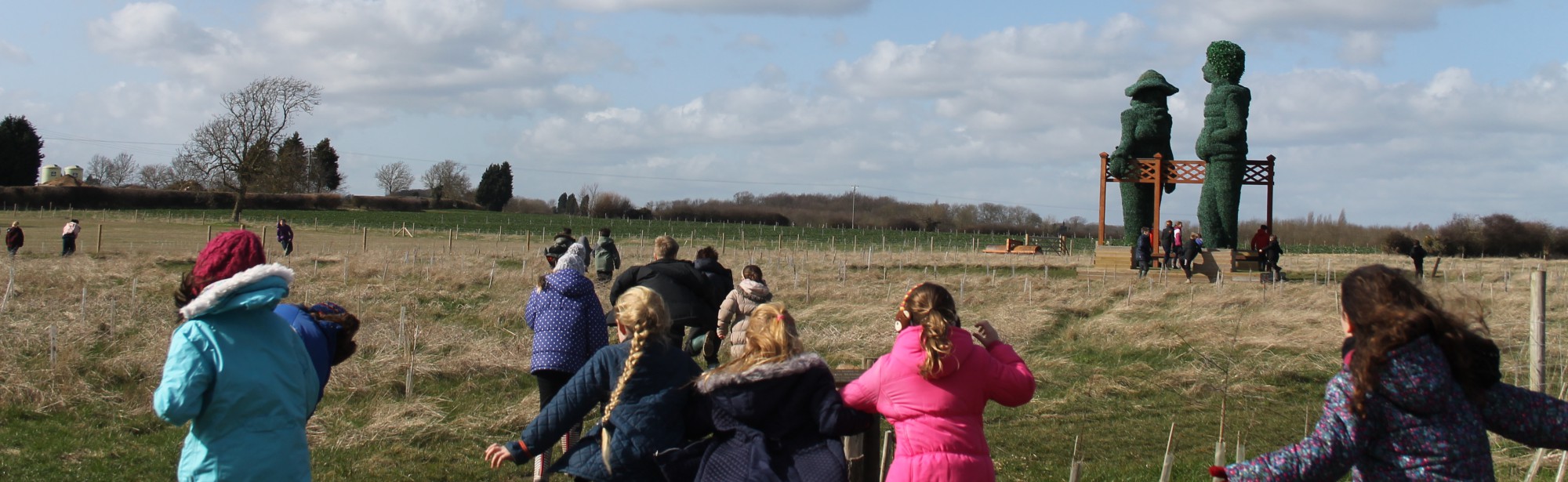
The village of Knowlton is one of these villages. Some villages are doubly thankful because they also lost nobody in WW2. Knowlton isn’t one of those, but it does have another distinction – Britain’s Bravest Village. The Weekly Dispatch newspaper held a competition in 1914 to recognise excellence in recruiting. The measure of bravery was to see how many volunteered for war service compared to the number of inhabitants, and the cut-off date was  28 February 1915. Twelve men joined up from a population of 39. When the result was announced there were complaints – mainly based on claims that most of the twelve, although they worked for the estate of Knowlton Court, were not actually residents.

Poppies at MENCAP Gardens

The village of Shillingstone, in Dorset, claims that its vicar objected, on the grounds that Knolton is only a hamlet, and that Shillingstone as runner-up, was then elevated to winner. The problem with this story is that Shillingstone wasn’t the runner-up, that was a village in Scotland called Mennock. Of course, Mennock is also a hamlet (a settlement without a church) so maybe Shillingstone objected to them too. But Shillingstone weren’t third either, that was the Orkney Islands, also in Scotland. It’s all looking a bit unreliable as a story. Anyway, Knowsley’s prize was a war memorial, which is ironic as they had no casualties to put on it. They took the course that was followed by several other places, of adding the names of the survivors.

The memorial is by George Frampton, noted sculptor, probably best known for his Peter Pan statue, or the Edith Cavell memorial.

If you look at the Mennock picture closely, you will see  a row of poppies in the foreground just like the ones we made on the farm, using the bottoms of pop bottles. THis was what prompted my selection of photos for the post. Strangely, although Mennock appears to have an Aberdeen granite war memorial by Frampton, the actual prize offered was either a Roll of Honour or a bronze medallion, according to different newspaper reports. There were several similar competitions on a local basis.

Considering that I’d never heard of the competition before I started to research an In Memorium card, I have manged to make a blog post out of it, and am likely to do more digging as it’s an interesting subject. I have just found the rules in the paper – it does state villages, but makes it clear that no borough and no place over 5,000 in population can enter. People don’t always differentiate between villages and hamlets, but it’s clearly a competition for smaller places.

Poppies and Rosemary in MENCAP gardens.

Sleep, Recover, Repeat

Clara Butt – Obverse

Clara Butt Reverse

Sorry. They say sleep is essential to recovery, and I seem to have been concentrating on recovery (in a chair in front of TV) for the last couple of days. The good news is that it’s working, but I do seem to have slacked off on the blogging.

In the wakeful gaps I spent some time reading a book that claims it’s possible to write a novel in ten minutes a day.I must have bought it a few years ago, judging from its position in the pile. So far it’s proving to be a disappointment. I know it’s theoretically possible to write a novel in ten minutes a day (even Don Quixote, if your taste runs to that length) but I was hoping for more specifics. So far it’s been about how to manage time.

This is useful, but so far it’s more about time management than writing. However, the fact I’m writing this is proof that it works. I’ve planned a sliver of time to write and I am using it. later I will watch an antiques programme then, probably when I wake up, I will write more. Or eat then sleep then write more. I’m undecided on the exact order.

Leicester Base Hospital showing soldier in “Hospital Blue” Uniform.

The “Base Hospital” was also known as the 5th Northern General Hospital. In 1914 it was empty, having formerly housed the county Lunatic Asylum. In 1921 it opened as a University, eventually becoming Leicester University.

I can tell I’m getting better. Last night I went to bed after deciding I didn’t have the time or energy to do the display on fund-raising flags I was planning for the Numismatic Society. This morning I woke up with the outline in my head. The brain is a wondrous thing.

It’s  bit nippy now, despite supposedly being a warm day. I’m going to go into the other room now, put a blanket across my knees and try a spot of recovery.

Sir Harry Lauder Obverse


Sir Harry lauder Reverse

Sir Harry Lauder was a man of many parts and the first British recording artist to sell a million records. His son was killed in 1916 and Sir Harry spent much time raising money for the war effort, including his Million Pound Fund to help disabled Scottish soldiers on their return home.


A Day with Few Results

After a day which produced very little in the way of results, I prepared the soup pan, set it going and sat down to read blogs before writing. I had just come to the end of the reading when the alarm went off. Time to do combat now – just me, a pan of mushrooms and a hand blender. I will be back later to write the rest of the post.

Back now. The soup was more watery than usual, which was actually good, as it is usually too thick. I added a sprinkle of dried Italian herbs tonight, which added to the flavour, and all was good. We then finished off the mixed fruit crumble Julia had made at the weekend with the last of the cream (it had lasted for three meals, which is quite good).

Northamptonshire Red Cross fundraising flag. Quite dull, as it has the same thing on both sides.

During the day I gave Julia a lift to the dentist, went to visit a couple of friends in their shop and, I confess, did very little until it was time to make soup. Julia is much the same. We are blaming it on our slow recovery from Covid. Next week we are hoping to be more active. But next Wednesday I have a blood test, a Shingles vaccination and a day at work. It is going to be more active whether I like it or not.

I’m already starting to think about my display for the Numismatic Society next month. The photos are some that I have taken to illustrate the display.

The one below is a better example – no rust on the pin, for one thing, plus it has a date and a location on it. In a collecting area which is bereft of reference material, this is important stuff.

Reverse

Obverse

A Lesson Learned the Hard Way

As usual, I have left things late. It’s the Numismatic Society tomorrow and, as part of my drive to injecting a little more life into it, I want to take a small display down. I did some research on an item last night, about two hours, plus a bit I’d done a few weeks ago, so probably three hours in all.

It’s a Sacriston Tribute Medal, which I have mentioned before.

I checked the man out, his family, his military history and the war memorials he was on (he was killed in action in 1916) and was quite pleased with myself for putting it all together. Then I thought I’d better do one final check, just to make sure that there was only one man of that name in the village. It had been niggling me all night that his rank on the medal was Private, but his military records showed Sapper and Lance Corporal. Sapper is the Royal Engineers equivalent of Private, and Lance Corporal is an appointment, not a rank, so L/Cpls are often still counted as privates by the army, so it could, I told myself, be right. But then again . . .

So I checked. There’s another man of the same name in the village in 1911. He was also there as a child in 1901, so it’s likely he was there for 1914-18 too. So, I may have spent hours researching the wrong man. And I still have other things to do to make a decent display.

Moral of the story – don’t just do your research – do it in the right order!

Sacriston Tribute Medal  – Obverse

Sacriston Tribute Medal  – Reverse


The Journey of a Life

It was beautiful as long as it lasted – The journey of my life
Farewell my Friends – Rabindranath Tagore

Today we celebrated the life of one of my uncles who died shortly after his 100th birthday. It was, to be honest, a very pleasant day. We set off at 7.30, the roads were clear and when we arrived in Wendover it was everything you would want from a small English town. The Church is light and airy and was pleasantly cool on a day that saw my car temperature gauge reach 33 degrees C. The service was excellent and we saw the memorial cross in the header, pictured by Julia.

It’s just a shame, as we mentioned several times, that we only meet when someone dies. If it hadn’t been for that it would have been a perfect day, with good weather and five generations of the family there. I’ve never had a picnic in a church before, so today’s post funeral buffet was quite a strange experience. I couldn’t, initially, rid myself of the feeling that I was going to be told off by a church official as I balanced a cup of tea and a plate of sandwiches on the chair next to me, but by the end, I was much more relaxed. I managed to spill cream from the excellent scones on my shirt, but fortunately I missed my tie. The tie is now folded back in the glove box ready for the next funeral.

I think one of the kids might have given it to me, as it’s much narrower than any tie I remember buying. This is good – if it had been wider the cream would have fallen on it, and ties are not easy to clean.

Now, a quick word on the wooden cross in the picture. I may have covered some of this before. After the war, as the Imperial War Graves Commission (as it was then) concentrated all the smaller burial grounds into the larger cemeteries we see today and erected the permanent grave markers, they gave the families the opportunity to have the original crosses from the graves of their loved ones. As I interpret the various articles I have read, the families had to pay for the markers to be sent. For many of them, already struggling to get by without a husband or a father, this additional cost could not be justified. Despite this, around 10,000 were returned. According to a website I read this evening, the location of approximately 550 are known. That means either that there are 9,450 held in private hands, which is unlikely, as you would hear about them or see them for sale, or that over 9,000 have rotted, been thrown away or otherwise lost. That is what happens to our history if we don’t look after it.

Of course, you could say that about a lot of things.

More information on Captain Hudson is available here. And here.


The Great Ledger of Life

If today were to have an entry in the Great Ledger of Life it would not, I suspect, be totally positive.

I had several interesting and reflective conversations with wife, which would be a positive.

Bacon and black pudding cobs for breakfast would be in the “iffy” column. They are definitely nice for a leisurely breakfast, but from a health point of view are almost certainly frowned on by thin people within the NHS.

Slept through and hour and a half of dull TV before spending a couple of hours awake in front of dull TV programmes. That would definitely be bed, and a waste of life.

“Read a Kindle book on the Vikings” should be a positive but as the entry continues “written with a 21st Century slant” you can probably guess what my thoughts are. The Vikings, it seems, are bad. I can go along with that, as it’s a point of view I’ve heard before. However, when I am  informed that they are bad on the grounds that they had slaves and influenced British Imperial thinking, I begin to recognise a touch of fashionable bias. Bias is OK in historical writing as we all have it, but I do dislike the taint of fashion or opportunism.

These are not, I confess, traits found only in this book, as virtually any TV historian you watch these days seems to be contractually obliged to mention the evils of slavery and Imperialism in relation to British history.

It’s very much like the popular view of the Great War – Lions led by Donkeys and all that, plus Blackadder Goes Forth and the famous drinks cabinet line. “Field Marshal Haig is about to make yet another gargantuan effort to move his drinks cabinet six inches closer to Berlin.” It’s a view that has been popular for around 60 years now, to the point where schools are showing Blackadder as a history resource, despite it being a comedy programme. You may as well rely on Oh! What a Lovely War as a source. However, if you say something often enough it becomes the accepted view, and is often accepted as fact, as you can see when reading many WP blogs.

That’s it for today. I’m going to look for some photos and go to bed now. I would say that I’ll see you tomorrow, but at my age you can’t always be certain of that. This is the problem with writing about unhealthy breakfasts and warfare – it encourages thoughts of mortality.

Olympic Breakfast


Private Dunkerley’s Plaque

The featured image is a bronze memorial plaque from the First World War. They were given to the families of servicemen, and women, who were killed in the war. Around 1,355,000 were issued, with 600 being named to women.

We bought it in the shop a couple of years and it has been lying in the back room since then. It’s clearly had a hard life. The hole at the top with wire loop is a modification you regularly see. It’s a defacement, but at least it means that the family displayed it for a while in memory of the life it represents. There’s a nick in the edge, probably where it was dropped, and green specks in several places. Normally that is verdigris, but in this case it’s what I’ve always thought was Windsor Green paint, a traditional shade used on exterior woodwork in old cottages. On looking it up I’m not quite so sure. It may actually be Brunswick Green.

Whatever it’s called, it’s an external paint and suggests the plaque might have spent some time outside or in a shed. It won’t be the first one to have suffered like this.

The final fault is that someone has polished the bronze, so it looks bright and shiny. I’m not sure it’s an improvement. However, it’s 100 years old and it’s seen many aspects of life in that time – from a memorial to a family member, hung on a wall, to a piece of history offered for sale at a car boot sale. One of our customers saw ti and brought it to us.

Meanwhile, what of Mr Dunkerley?

Great War Memorial Plaque –  32265 Private Charles Dunkerley, Manchester Regiment

He is actually traceable because only one  Charles Dunkerley died in the war. The Commonwealth War Graves Commission website has details of 46 Dunkerleys. They came from Australia, Canada and South Africa, though the majority came from the north-west of England. They are buried from the UK to the Far East.

Charles Dunkerley’s military records are still available on-line. He was a clerk, who enlisted in 1915 aged 32. He served in Mesopotamia with the Manchester Regiment, being wounded by shrapnel in the shoulder on 9th January 1917 at Kut al Amara, during the retaking of the city. It had been the scene of a humiliating defeat in 1916 and is not one of those campaigns that attracts much notice. He was treated in hospital in India and was posted to Egypt in December 1918.

He appears to have been employed as a clerk after his wounding, and is listed as Category B 2. Category B meant that he was not fit enough for General Service  but still fit enough to serve overseas on lines of communication. B2 denotes that he was able to walk 5 miles to and from work and see and hear sufficiently for ordinary purposes. To be B1 he would have had to be fit enough to march 5 miles and shoot with glasses. I’m guessing that marching involved full kit where walking was less onerous.

His parents were both dead by the time of his return, and he had one sister. The address he gave on enlistment was the same as her address, which he gave as his address when embarking on his demob leave. The journey home began in Egypt on 4th July 1919 and he went to Prees Heath (a dispersal depot which received men landing at Liverpool).  He was released on 22nd July and made his way to Manchester. He was, according to his sister, in perfect health on 25th July but complained of a pain in the head on Friday 26th. After a few days of illness he began to feel better but on Friday 1st August relapsed into unconsciousness. He was admitted to Nell Lane Military Hospital, where he died at 5.55pm on Saturday 2nd August. Cause of death was due to Acute Infective Meningitis, probably due to parasites from sandfly fever.

The 1911 census shows that he was living with his mother, Alice. I know this is her name as she was still alive in 1915 when he enlisted. His sister Martha Ann (Martha Ann Whittaker as she became on the service record) was 20 and still living at home.

In 1911 Charles was a Railway Engine Fitter’s Labourer/Student. He had obviously moved up in the world by 1915. His father died somewhere between 1891 and 1901 and he also seems to have lost both a brother and a sister between 1891 and 1919.

It’s taken me two years to write this, but there is clearly more to do. That’s the allure of working in the shop, the ability to reconstruct a story, even imperfectly. It’s not a happy story, but I like to think it was worth doing – his sacrifice merits more than just being sold at a car boot sale.