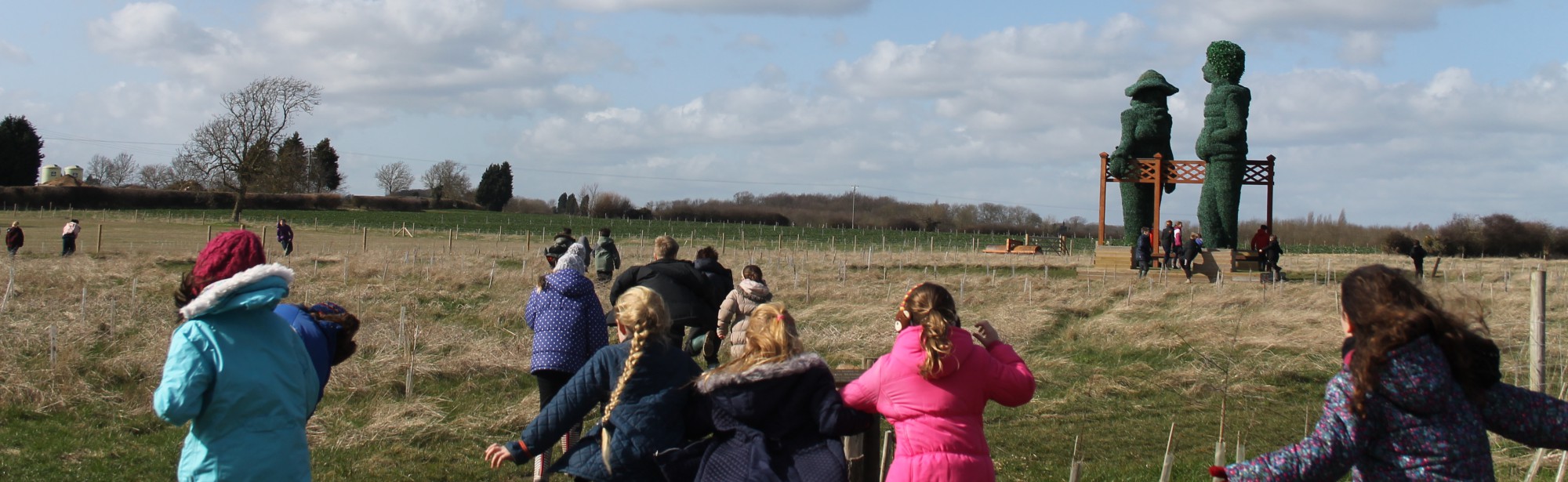
…let us sit upon the ground
And tell sad stories of the death of kings
Richard II William Shakespeare
It’s time for Richard II now. He was the son of the Black Prince, who didn’t live long enough to be King, though he was quite kingly and was the victor of Crecy and Poitiers, the battles that, with Agincourt, make up the only three battles of the Hundred Years War most of us have ever heard of.
Richard was eventually imprisoned and was probably starved to death by his gaolers. Quite honestly, he had it coming, as he wasn’t an easy man to work with and seems to have gone out of his way to upset people. He didn’t, as I recall, do right by the leaders of the Peasants’ Revolt , though he was only a boy at the time. Later, he took on the political establishment, was accused of tyranny, and even madness, and was given a bad write-up by Shakespeare. His body was put on display to show he was really dead, and to stop anyone believing the was hope of a restoration.
Henry IV and V were interesting enough, but shuffled off this mortal coil due to natural causes, whereas Henry VI was said to have died (whilst imprisoned in the Tower of London) of melancholy. I’m sure it can be a melancholy place, but let’s face it, he was in there, out of sight and imprisoned by the man who had taken his throne (Edward IV). Several centuries after his death he was exhumed and examination showed damage to his skull and blood in his hair – more a sign of murder than melancholy.
Edward V ruled briefly before being replaced by his uncle, who became Richard III. He is one of the two Princes in the Tower and as nobody knows what really happened (though we all have an opinion) I will leave it there.
Richard III is well known, though mainly via Shakespeare, as is his death and his rediscovery under a car park in Leicester.
At that point we can leave the Wars of the Roses and get on with something a little less complex. Henry VII, who had no real right to the throne, came out on top and died of natural causes. Henry VIII also died of natural causes, unlike several of his wives. Edward VI was sickly, and died aged 15, bequeathing the throne to his cousin Jane.
Lady Jane Grey ruled 9 days, becoming a protestant martyr and making Edward V’s 86 days look like a lifetime, which, of course, it probably was. I know she’s a Queen rather than a ing but it seems out of step with modern views to exclude people for being women. She is the only monarch of the last 500 years of whom we have no proven portrait. I don’t suppose she had the time. Eventually she was executed. For details of how the Duke of Monmouth coped with this problem you will have to read the post Kings we Never Had. I can’t supply a link because I haven’t written it yet.
Mary I, Elizabeth I, James I (or VI if you are Scottish) all had their foibles but died of natural causes, and Charles I has been covered in an earlier post.
Charles II could have died of several things. With twelve illegitimate children it could possibly have been exhaustion. Two of his illegitimate sons had a place in the family tree of Diana, Princess of Wales, which means that when Prince William eventually ascends the throne he will be the first descendent of Charles II to do so.
It could also have been apoplexy or his kidneys, though I prefer the mercury poisoning explanation. It seems that one of his plans for financial security was to turn lead into gold. He was a bon viveur, but, let’s face it, no financial genius. There was a lot of mercury involved in the process and though he obviously had people to do the work for him, he must have inspected his laboratory regularly and taken it in.
Charles’s last illness shows all the signs of mercury poisoning according to recent scientific examination and analysis of a lock of his hair shows ten times the normal levels of mercury.
William III, who ruled alone after the death of his wife Mary (daughter of the deposed James II) fell off his horse after it stumbled on a molehill, and died from pneumonia that came on as a complication. It was ironic that the horse had been confiscated from a Jacobite plotter. The Jacobites took the opportunity to toast the mole (“the little gentleman in the black velvet waistcoat”).
After that there were 234 years when Kings and Queens just died of natural causes.
That brings us to George V, who seems have been given an overdose to make sure he died at a time convenient for the morning papers. The evening papers, it seems, were not seen as respectable enough.
